Stand at the northern edge of the site around midday and a delivery moped will cut down a lane that has followed the same line since the second century. Izmir's Roman marketplace doesn't sit behind glass in a museum district — it's a sunken block of columns and vaulted basements in the middle of a working neighbourhood, with laundry lines and a mosque minaret rising over the colonnade. Two thousand years of city life happened on top of this agora before anyone dug back down to it, and in 2026 that's still the most interesting thing about visiting: the ruin and the street share the same ground.
The Agora Itself: Izmir's Roman Marketplace
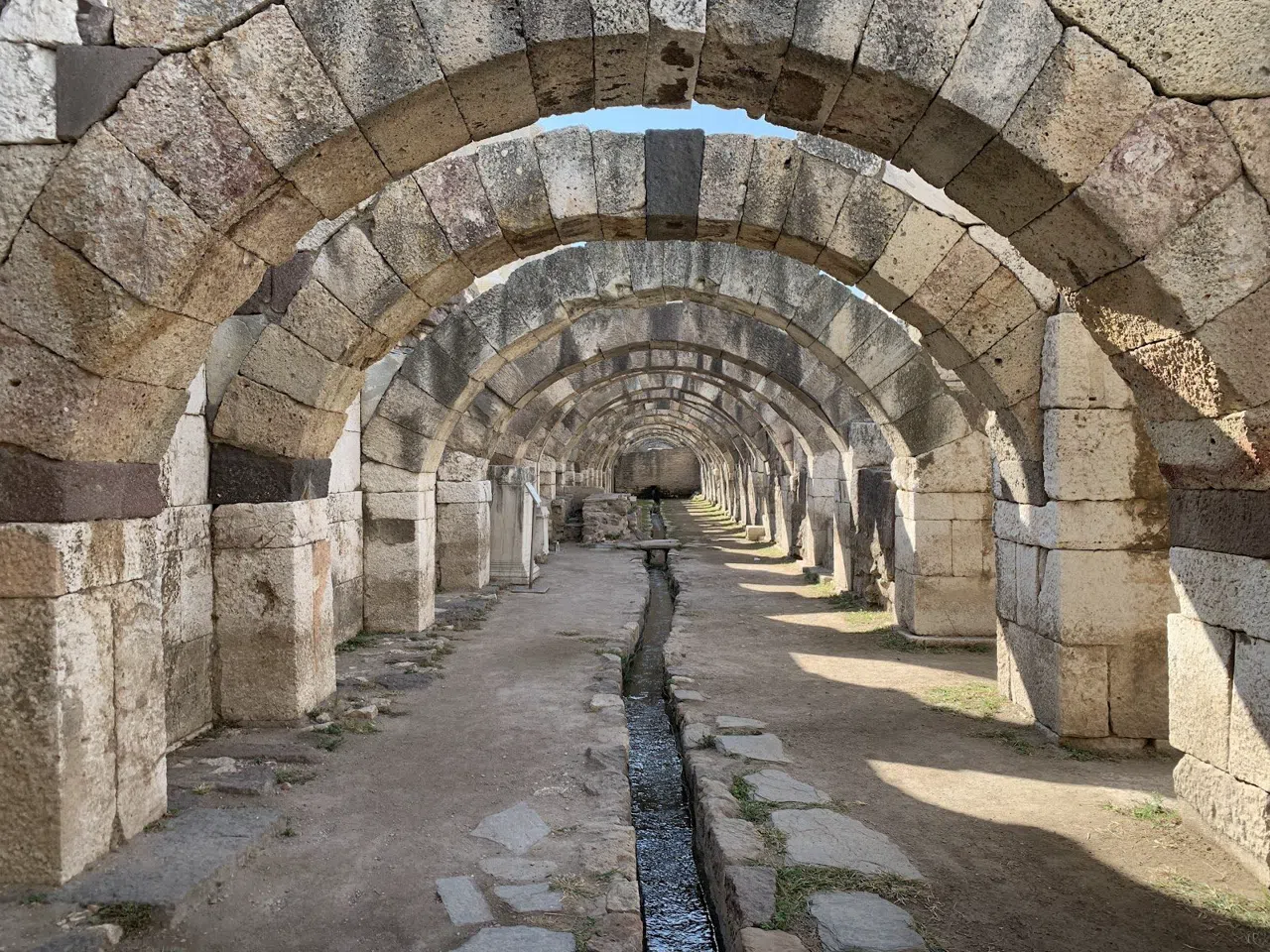
The Agora of Smyrna (Smyrna Agorası, in the Namazgah district just north of Konak) is the piece the whole visit is built around, and it earns that role. What's on the ground now is largely the 2nd-century rebuild — Smyrna's original agora was levelled by an earthquake, and the version standing today, with its long colonnaded stoas and rows of Corinthian capitals, is the replacement the Romans put up afterward. The site is still mid-excavation, which means it looks less like a finished monument and more like a place still being pulled out of the city around it: dig trenches sit a few metres from apartment blocks, and the columns stand exactly where the neighbourhood grew up around them.
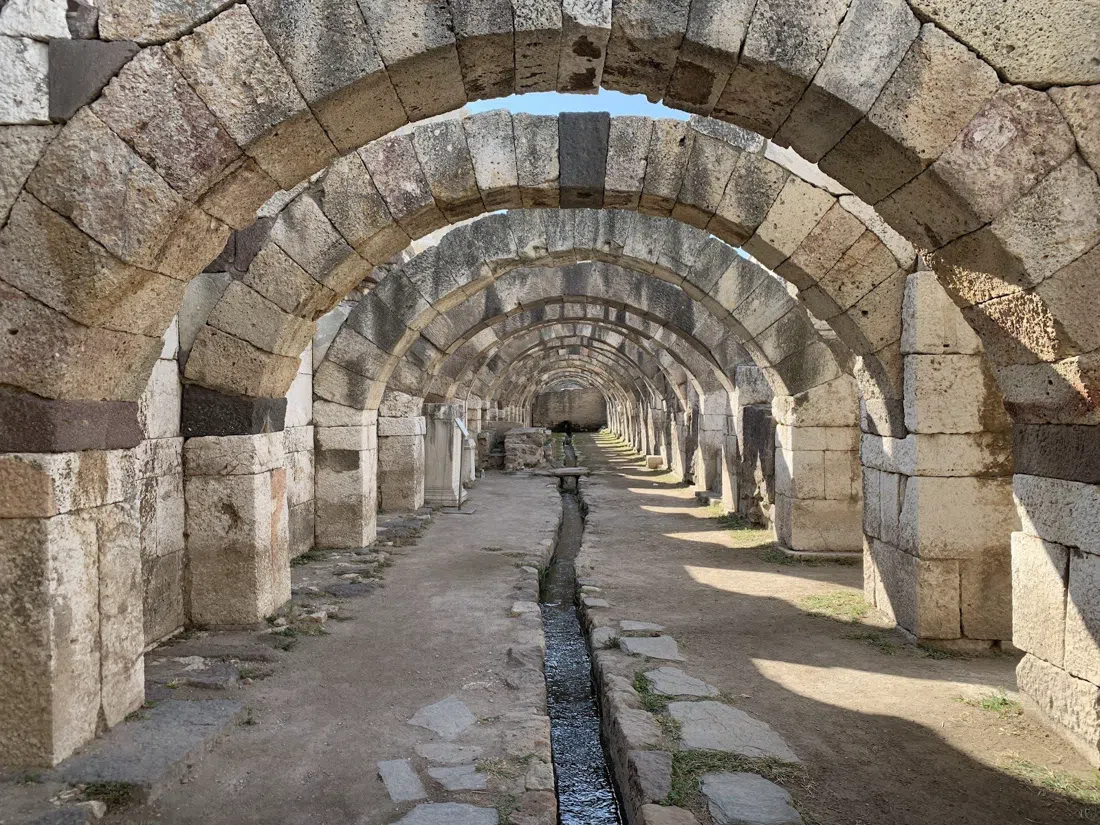
The most atmospheric part isn't at street level. A basement gallery — a vaulted, brick-arched substructure that once housed shops and workrooms below the main market floor — survives largely intact, and walking through its cool corridors gives a better sense of Roman commercial life than the open colonnade above does. Give it 45 minutes to an hour if you're moving briskly, longer if you want to read the information boards properly.
Practically, this is an easy site to visit. It's open-air with wide walkways, so it takes groups comfortably and there's no advance booking required — you can turn up and go straight in. Licensed guides commonly work the site, and hiring one on the spot (or booking ahead through a city tour operator) is worth it if you want the excavation history explained rather than guessed at from the boards. Entrance runs around €6, it's free for children under 10, and it's covered by the Museum Pass Türkiye, which is worth buying upfront if you're planning to hit more than two or three sites in the region.
Above the Agora: The View From Kadifekale
Look up from the Agora and you'll see the fortress that explains why Smyrna sat here in the first place. Kadifekale (Velvet Castle), on the hill above Konak and Basmane, was built by Lysimachos — one of Alexander the Great's generals — in the 3rd century BC, and it's still the single best skyline view of the city and the gulf beyond it.
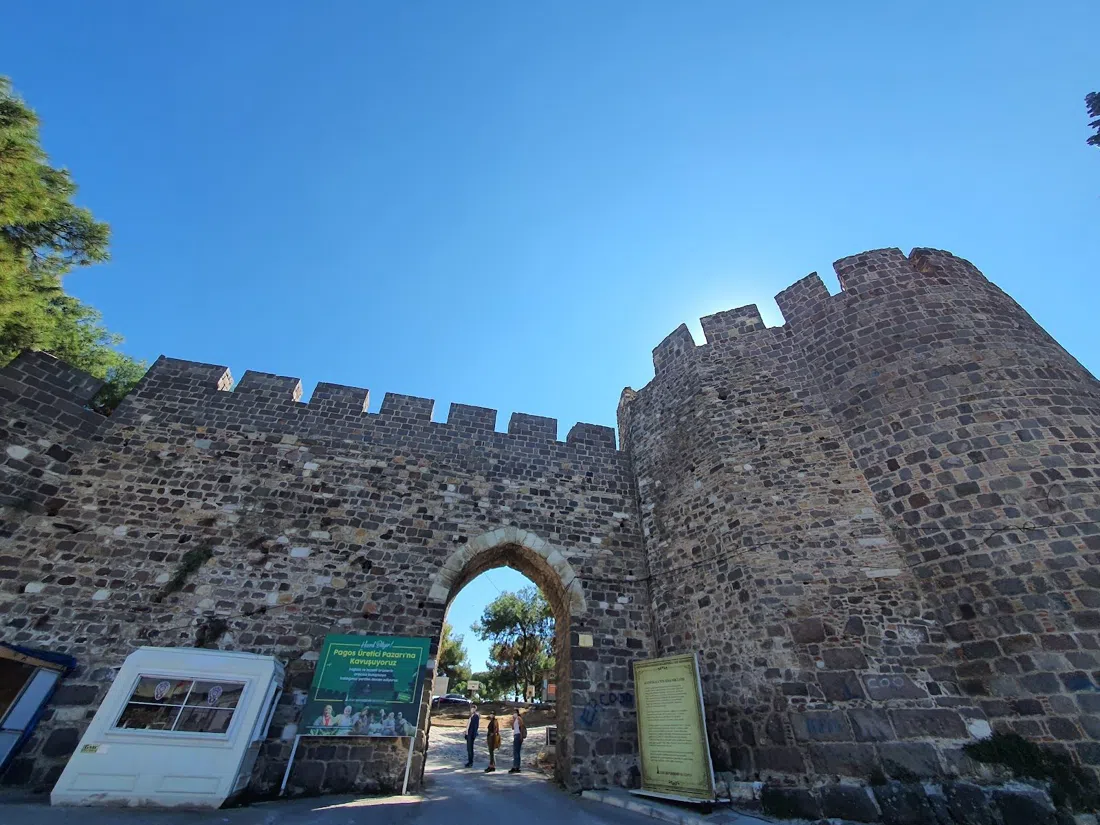
Access is free and unticketed, no booking of any kind, which makes it tempting to treat as a quick add-on to the Agora. Be honest with yourself about the approach, though: the climb up is steep, and the terrain inside the fortress walls is uneven and poorly maintained in places — loose stone, unmarked drops, not much in the way of railings. It's manageable for a couple or a fit solo traveller willing to take it slowly, but it's a genuinely awkward walk for a large group or anyone with mobility limitations, and the climb isn't worth recommending for either. Take a taxi or a bus up instead and save your legs for the walking the Agora already demands.
One more honest note: Kadifekale doesn't get the same upkeep as the Agora. There's litter in places and graffiti on some of the walls, and it's a working public park as much as a heritage site, with tea stalls and locals out for the view rather than a curated ruin. Go for the panorama and the history of why this hill mattered, not for a polished monument experience.
The Museums That Complete the Story
The Agora's basement excavations produced most of what fills two museums a short taxi or bus ride away, and pairing at least one of them with the ruin itself turns a good visit into a genuinely well-rounded one.
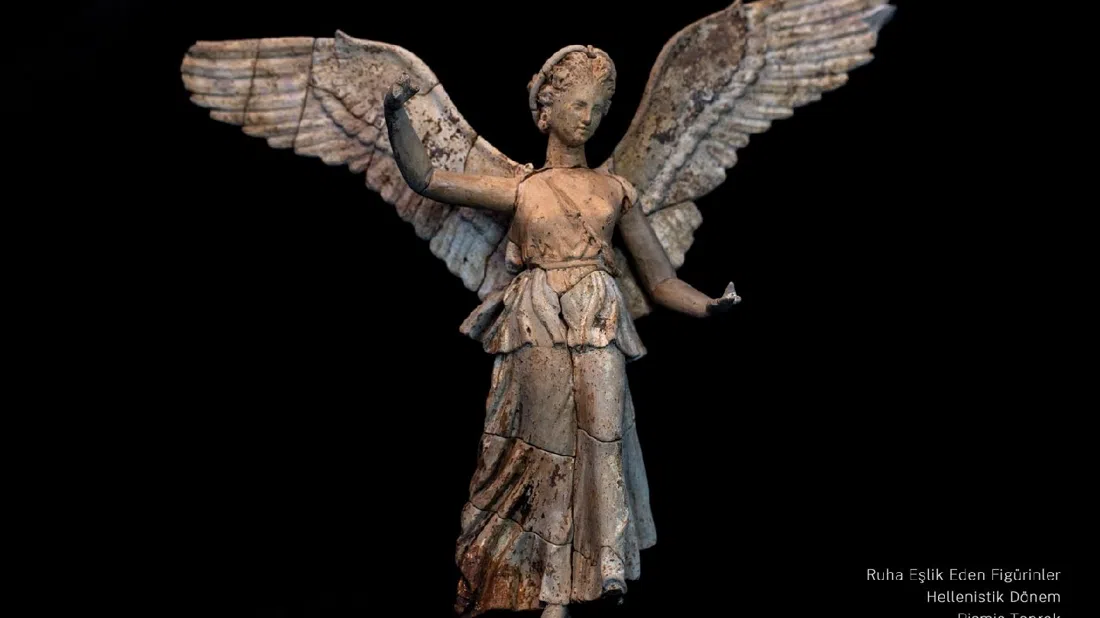
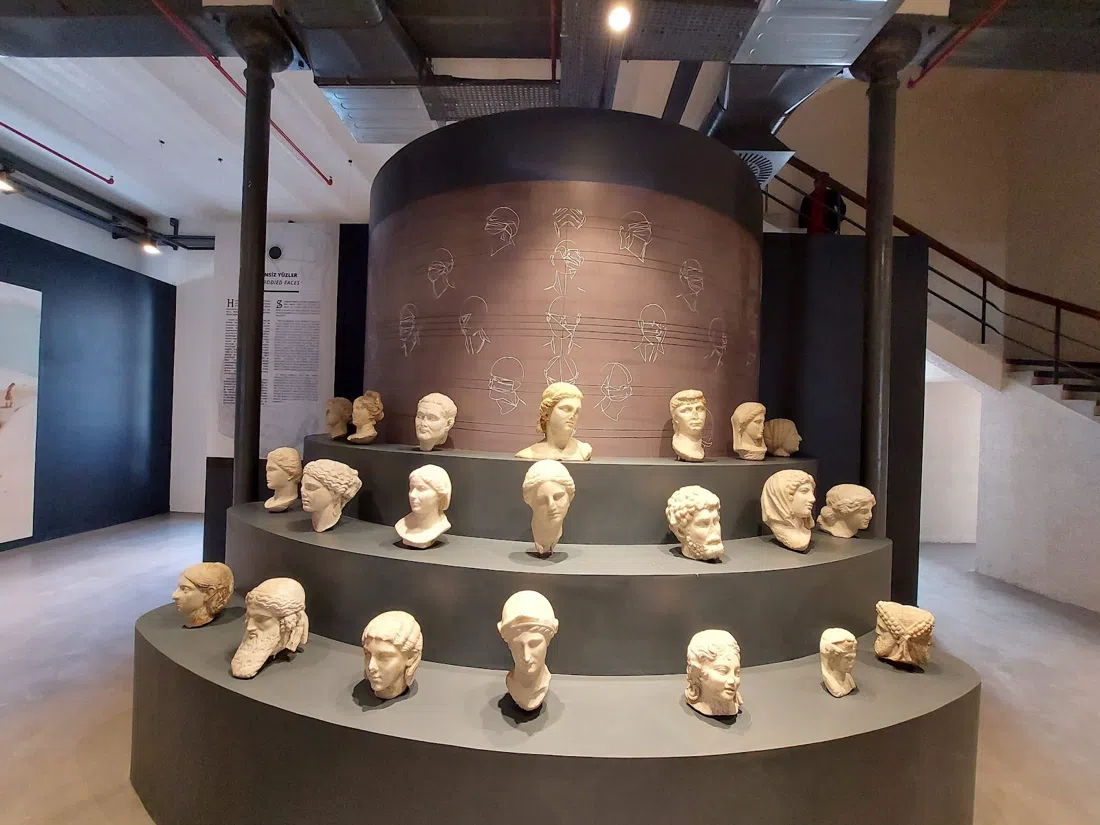
The İzmir Archaeology Museum, in Bahribaba Park near Konak, is the direct sequel to the Agora — a substantial share of the statues, inscriptions and architectural fragments on display were pulled straight out of the marketplace's lower galleries, so seeing them here after walking the site gives context the ruin alone can't. It's a standard museum visit: no special booking, easy group access, and a modest TRY entrance fee that's covered by the Museum Pass Türkiye if you've already bought one for the Agora.
Next door, in the same Bahribaba Park cluster, the İzmir Ethnography Museum is the natural bridge from Roman Smyrna into Ottoman-era İzmir — it picks up a story the Agora doesn't tell, covering crafts, domestic life and trade guilds from a much later period of the city. It's an easy add-on for anyone already at the Archaeology Museum rather than a destination in its own right, with the same modest fee and no separate booking required.
The Deeper Root: Old Smyrna Before the Romans
If the Agora tells you what Smyrna looked like as a Roman marketplace, Bayraklı Höyük (also called Old Smyrna or Tepekule), out in the Bayraklı district, tells you where the city actually began — centuries earlier, as a settlement long before Rome rebuilt anything.
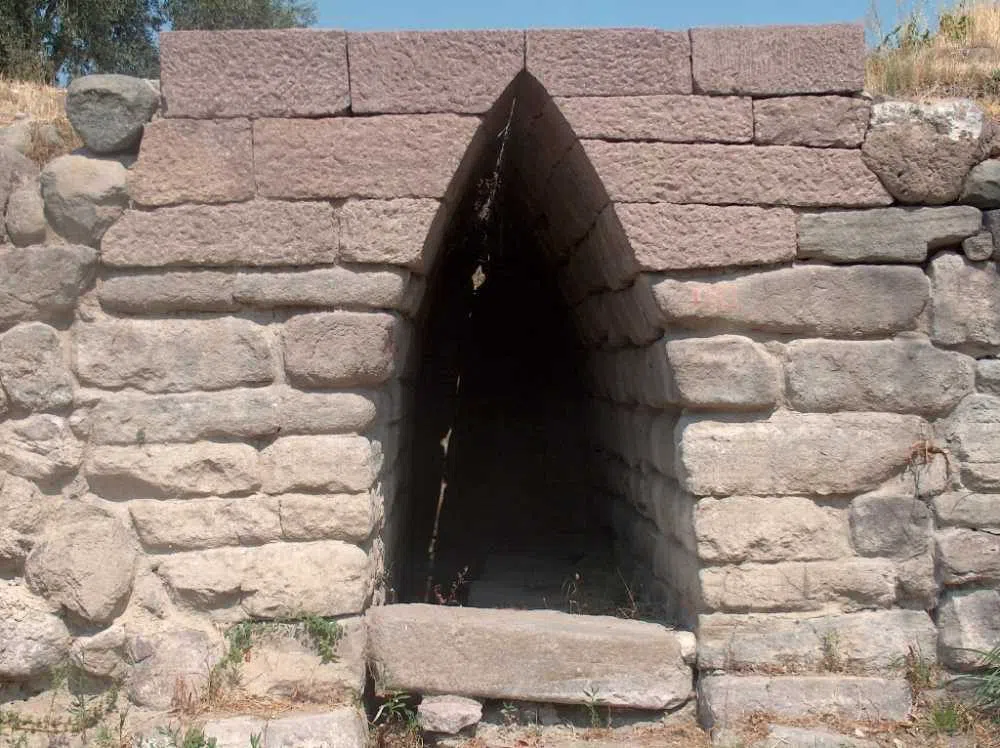
It's reachable by İZBAN commuter train, which makes it an easy half-day extension for anyone based in the centre, but be clear-eyed about what you're getting: this is a small, low-key mound, not a dramatic monument. It suits a couple or a small group happy to read the site with a guidebook or a good guide rather than expecting the visual payoff of the Agora — it isn't set up for coach tourism and doesn't try to be. Entry is free. For readers who want the full arc of the city's history rather than just the Roman chapter, it's worth the detour; for anyone with limited time, the Agora and the museums tell the more dramatic version of the same story.
Ephesus and Selçuk: The Grand Companion Piece
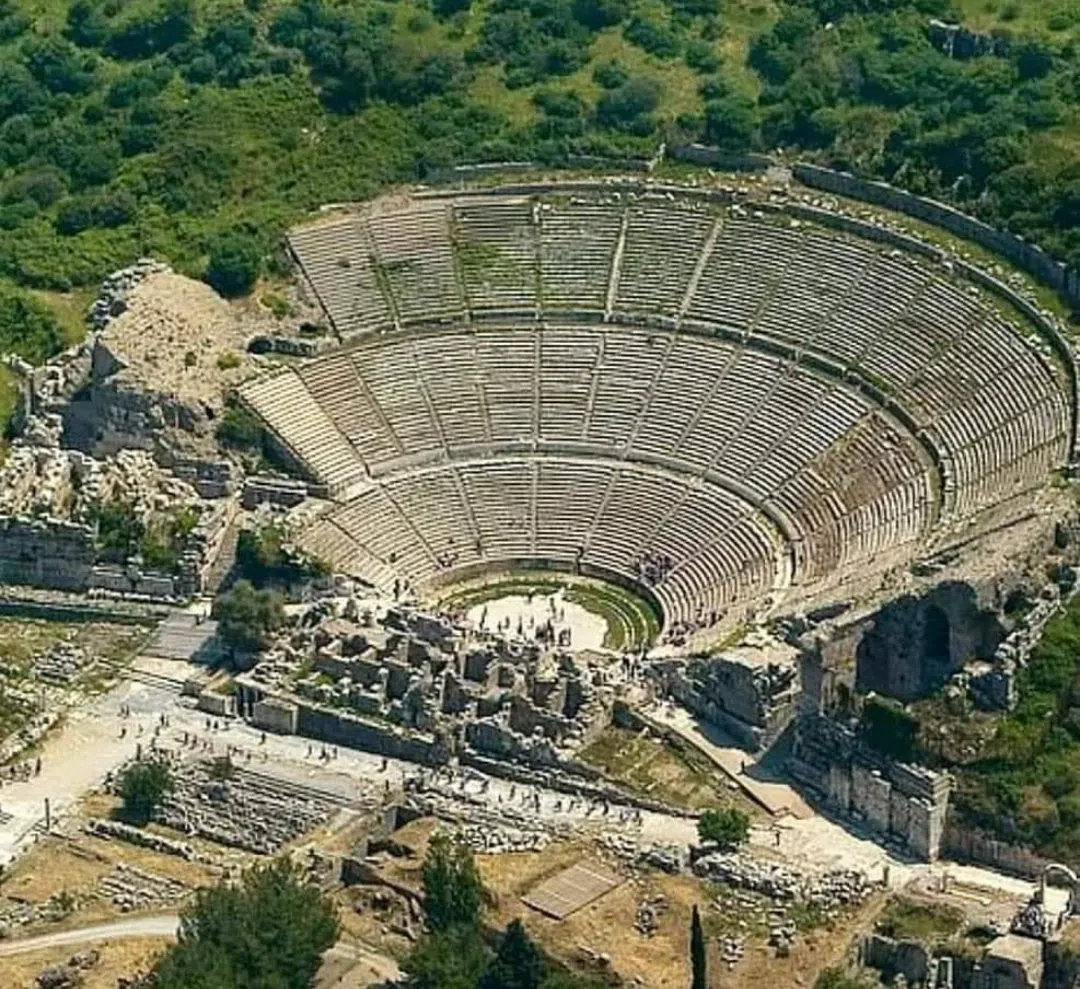
Nothing near Izmir puts the Agora in perspective quite like seeing the same Roman-Aegean world built at ten times the scale. Ephesus Ancient City, about an hour south near the town of Selçuk, is the region's biggest coach-tour draw for good reason — marble streets, a rebuilt library façade, a theatre that still seats thousands. It's the most group-friendly site on this list by a wide margin. The trade-off is crowding: book an early departure, or better, one of the new night visits running Wednesday to Saturday, 19:00–22:30, from June through November 2026, to see it without the midday coach crush. Entrance is €40, with the Terrace Houses (worth it if you have the extra time) an additional €10.
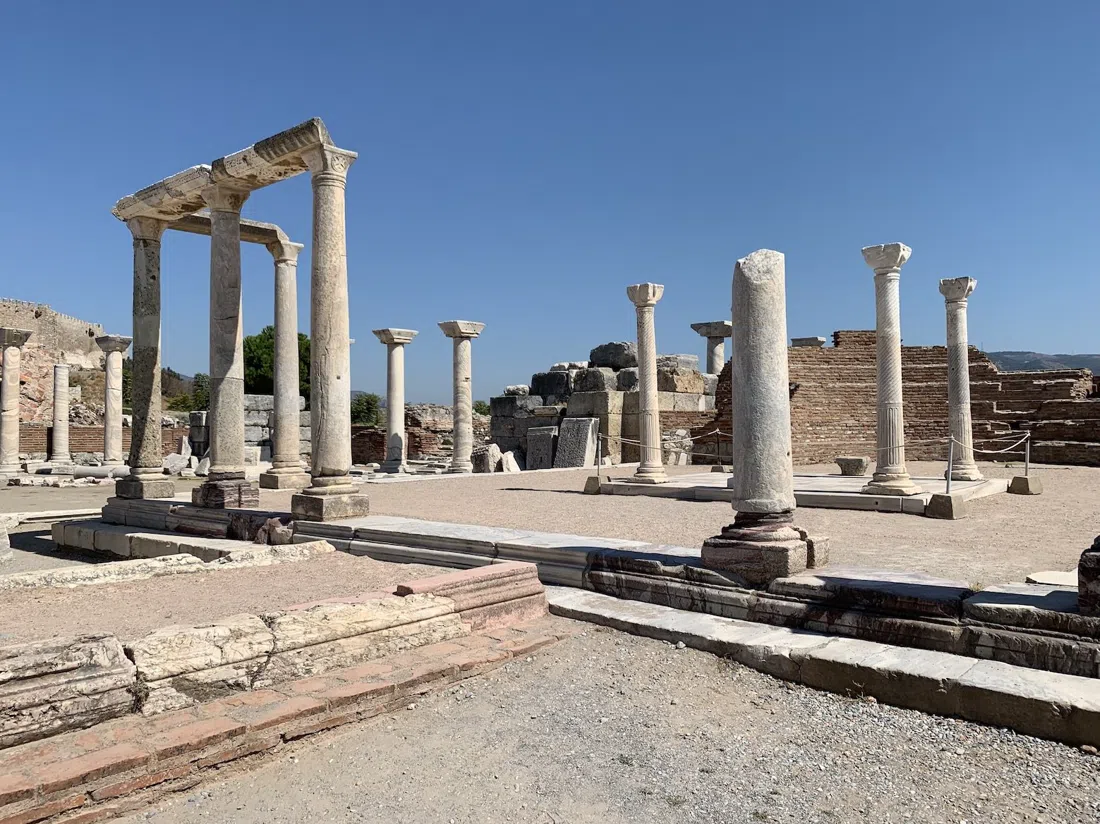
While you're in Selçuk, the Basilica of St. John & Ayasuluk Fortress is a natural add-on — Justinian's basilica, built over the reputed tomb of St. John, sits right beside the fortress on the hill above the town, and a single €6 ticket covers both. It's a group-friendly stop that most itineraries fold straight into an Ephesus day.
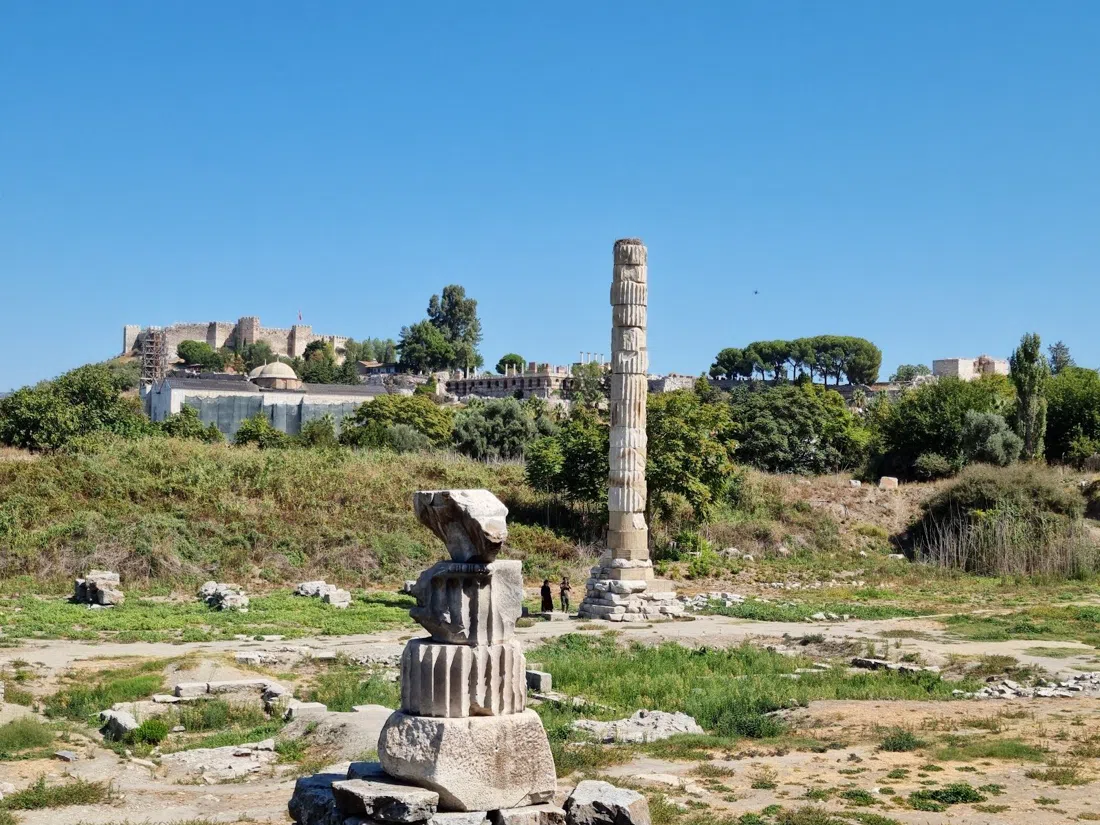
The Temple of Artemis, a 15-minute walk from Selçuk centre, is worth including for the name recognition — it was one of the Seven Wonders of the Ancient World — but set expectations honestly before you go: it's free, unstaffed, and today amounts to little more than a single reconstructed column in a field. It's a five-minute reflective stop, not a sight to build time around, though it costs nothing to add on.
Sardis and Pergamon: Quieter Ancient Capitals
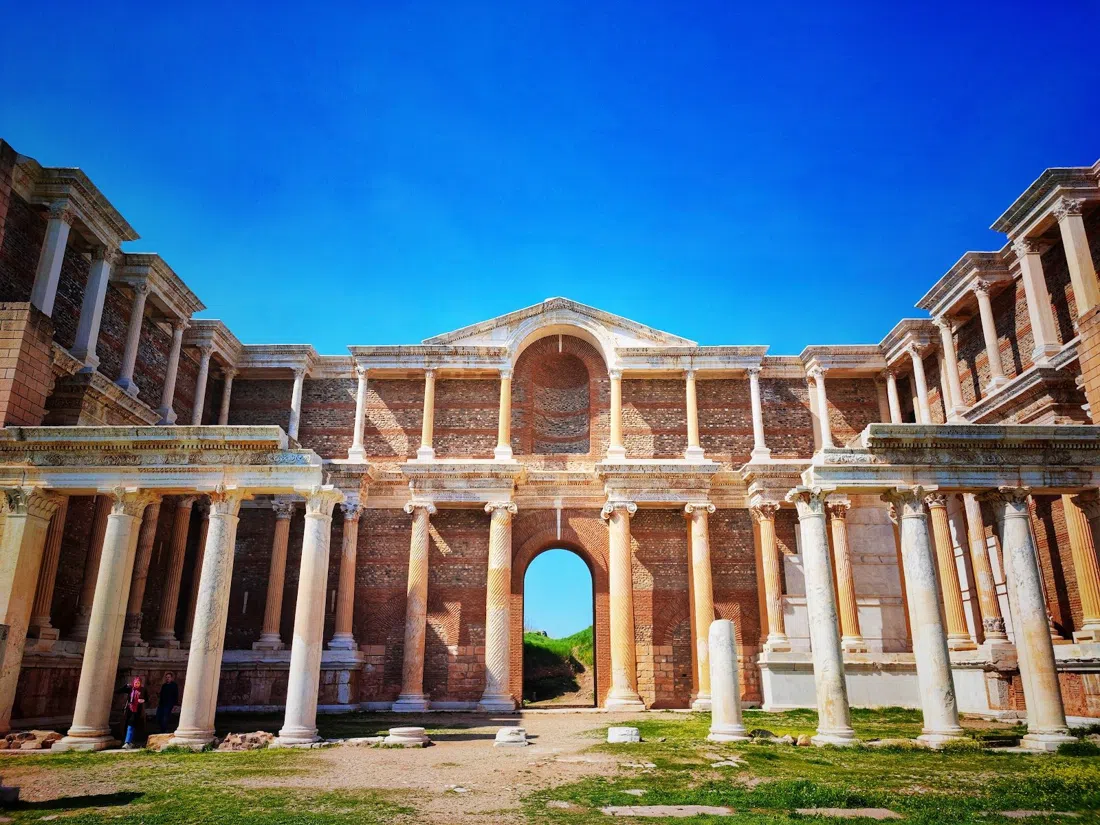
Two sites further out reward slower, less crowded visits than Ephesus offers. Sardis Ancient City, around 90 minutes from Izmir near the village of Sart, was the capital of ancient Lydia — the kingdom credited with inventing coinage — and its spacious layout takes coach groups easily while staying noticeably quieter than Ephesus, which makes it a good pick for groups who want to walk at their own pace rather than around a crowd. Entry runs to roughly 70 TRY, a few euros either way.
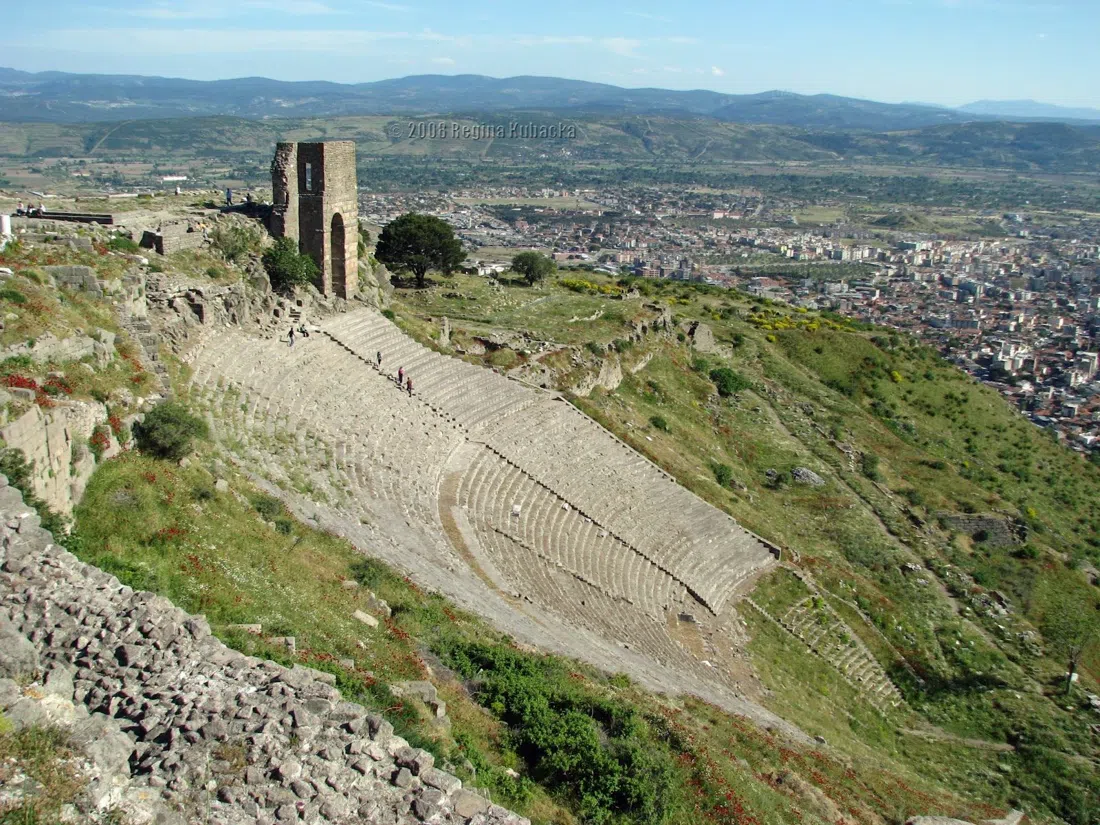
Pergamon Acropolis, in Bergama around 100km north, is the dramatic counterpart to the Agora's street-level intimacy — a UNESCO World Heritage hilltop city with sweeping views, reached by cable car from the town below. It's group-friendly, but the cable car has real capacity limits at peak times, so pre-arrange group slots rather than turning up and hoping. Budget €15 for the acropolis and €7–10 for the cable car return.
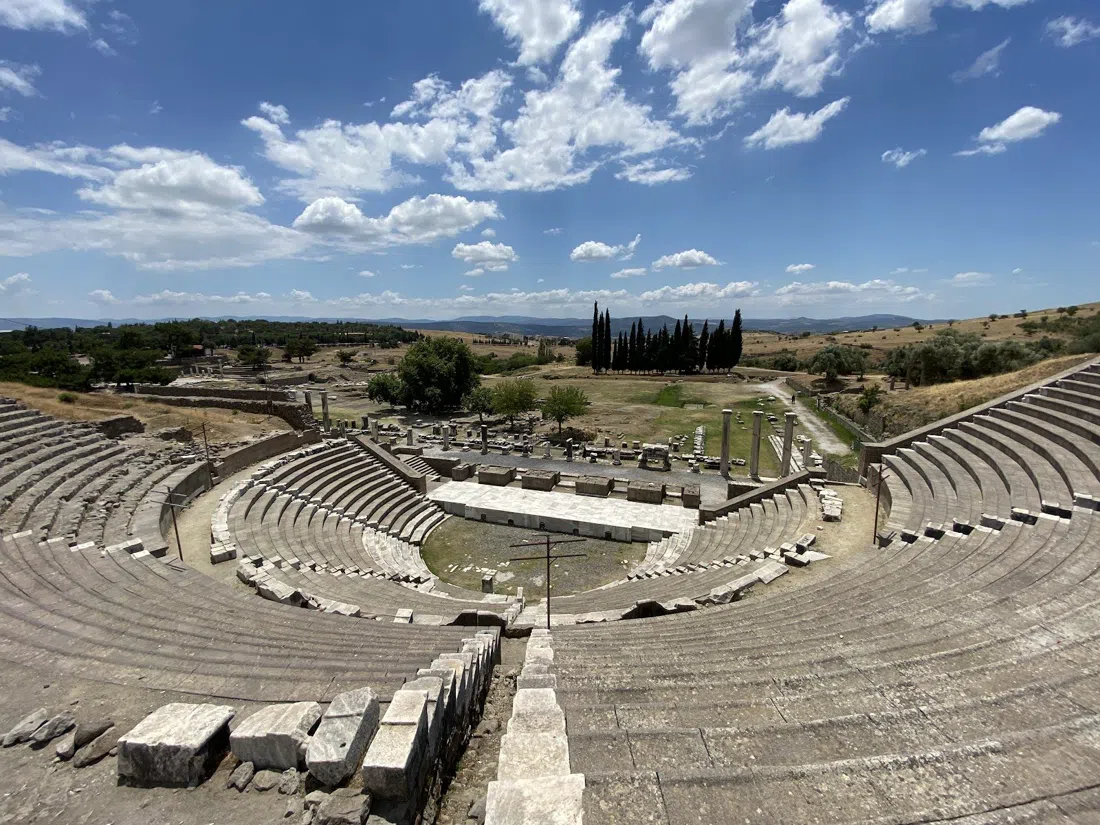
Down the hill in Bergama, the Asklepion — one of the ancient world's leading medical-healing sanctuaries — is a separate site with its own €13 ticket, usually paired with the Acropolis on the same day trip rather than folded into it. Treat the two as a matched pair, not a single stop.
Metropolis, Klazomenai and Teos: Ruins Without the Crowds
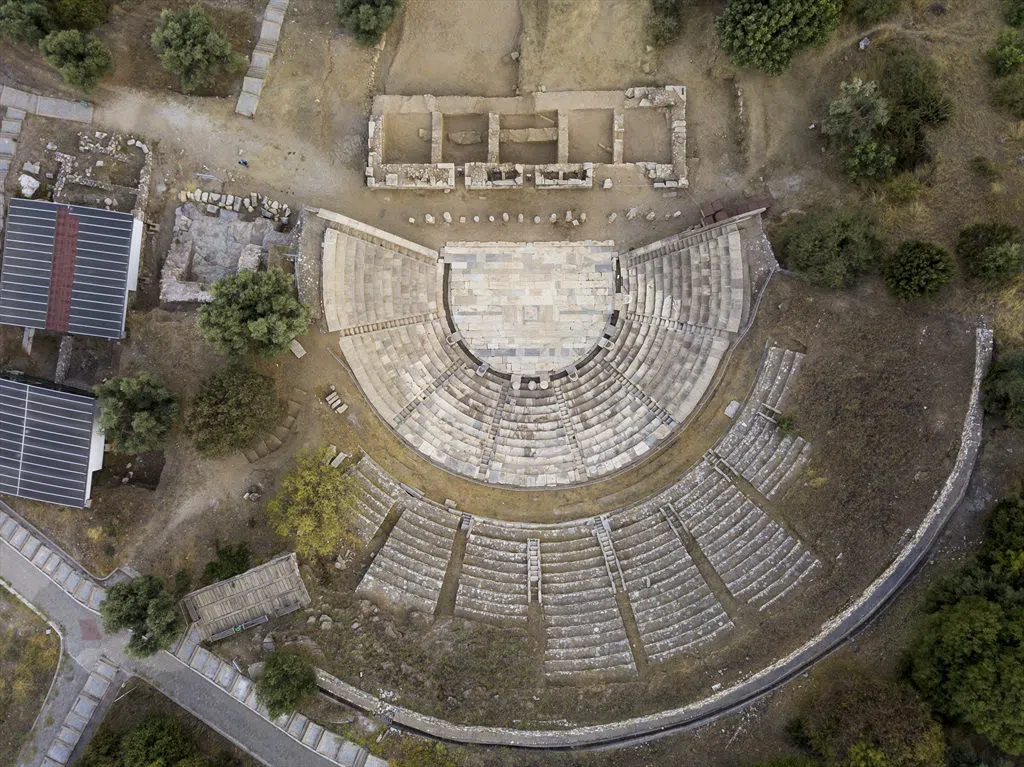
For travellers who've done the big names and want more without the coach-park atmosphere, three under-visited sites sit within reach of Izmir. Metropolis Ancient City, under an hour away near Torbalı, has good paths, information boards and covered parking, and takes groups comfortably while staying far less crowded than Ephesus — currently free to enter, though a fee is likely to be introduced, so don't assume it stays that way through the rest of 2026.
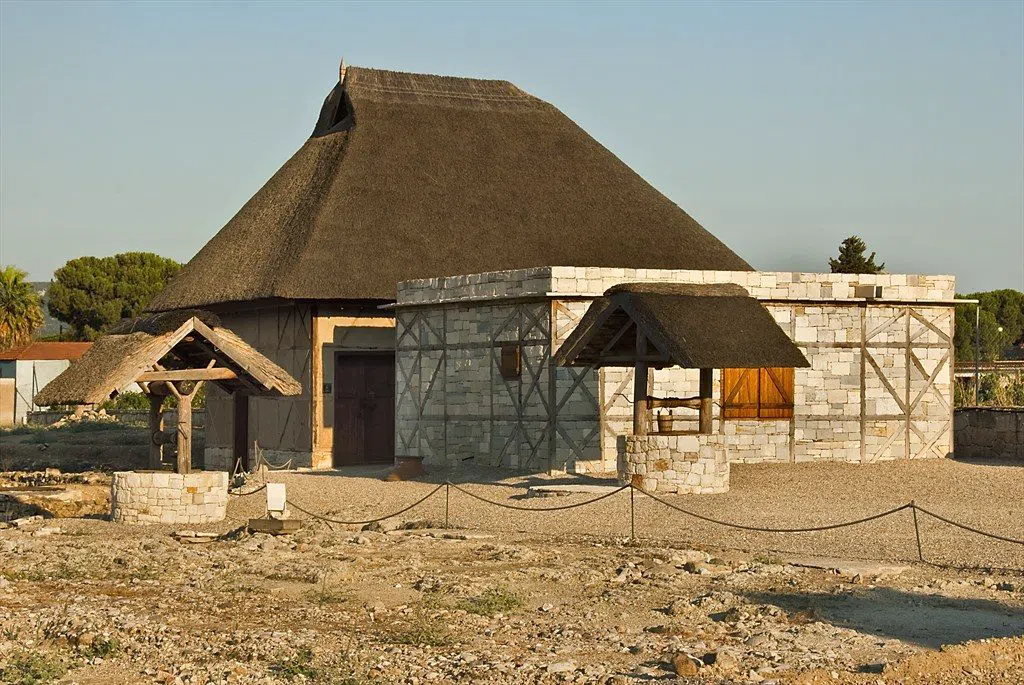
Klazomenai Ancient City, on the coast near Urla, is an open, free site best visited with a local guide who can explain its olive-press installations — it was famous in antiquity for one of the earliest known olive-oil industries, which ties neatly back into the Agora's own story as a trading hub. It suits small-to-medium groups rather than large coach parties.
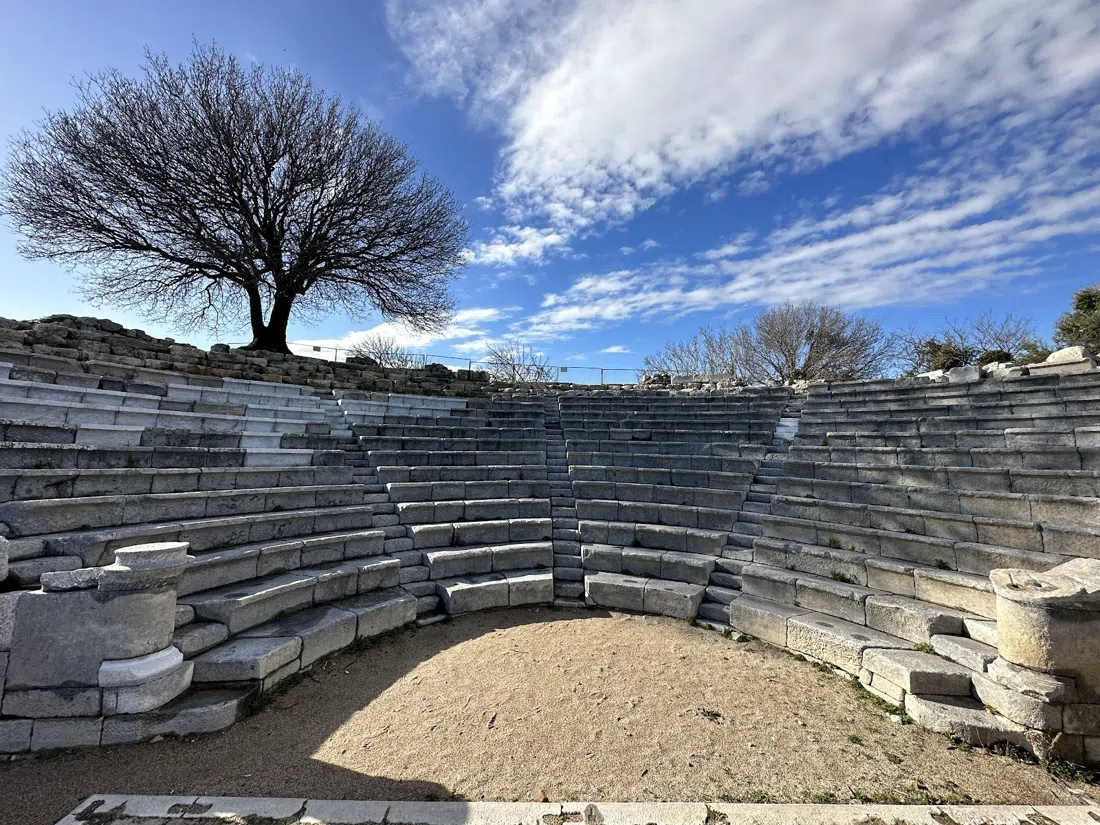
Teos Ancient City, near Sığacık and Seferihisar, is a wine-god sanctuary in a forested coastal setting, with small-group walking tours running regularly from the nearby towns. Entry is nominal — effectively free — and the site has minimal infrastructure, so it's best treated as a scenic, unhurried addition rather than a headline stop.
Planning Your Visit
Transport: The Agora and Kadifekale both sit within the central Konak/Basmane area, walkable from most central accommodation, though the Kadifekale climb is better done by taxi or bus, as above. Bayraklı Höyük is a straightforward İZBAN train ride. For the day trips, Ephesus and Selçuk are roughly an hour by car or organised tour bus; Sardis and Pergamon both run 90 minutes to two hours depending on traffic; Metropolis, Klazomenai and Teos are all under an hour and reasonable as half-day trips. If you're not driving, book day-tour transport rather than relying on public transport for the further sites — connections exist but are slow.
Cash: Carry some Turkish lira for smaller sites (Sardis, and any tea stalls or informal vendors at Kadifekale) — card acceptance is inconsistent at the less-visited ruins, even though the major ticketed sites take cards. The Museum Pass Türkiye is genuinely good value if you're combining the Agora and both İzmir museums — it pays for itself quickly on a longer city itinerary.
Timing: Visit the Agora in the morning, when the site is cooler and quieter, and save Kadifekale for late afternoon if you want the golden-hour view over the gulf. Ephesus is worst at midday in summer — take the early departure or the night visit if your dates fall between June and November. Spring and autumn are the more comfortable seasons for walking any of these sites at length; midsummer heat makes the Agora's basement galleries a genuine relief.
Budget: A single day covering the Agora, Kadifekale and one museum costs well under €20 per person in entrance fees. A day trip to Ephesus with the Terrace Houses runs closer to €50 once transport is added; Sardis, Metropolis and Klazomenai are the cheapest add-ons if you're stretching a longer stay across the wider region.
For where to base yourself while you work through this list, start with the Izmir hotel search — Konak and Alsancak both put you within easy reach of the Agora and the ferry lines out to the rest of the gulf. And for the wider rundown on the city beyond its ruins, the Izmir guide covers where to eat, where to stay by neighbourhood, and how to get in from the airport.