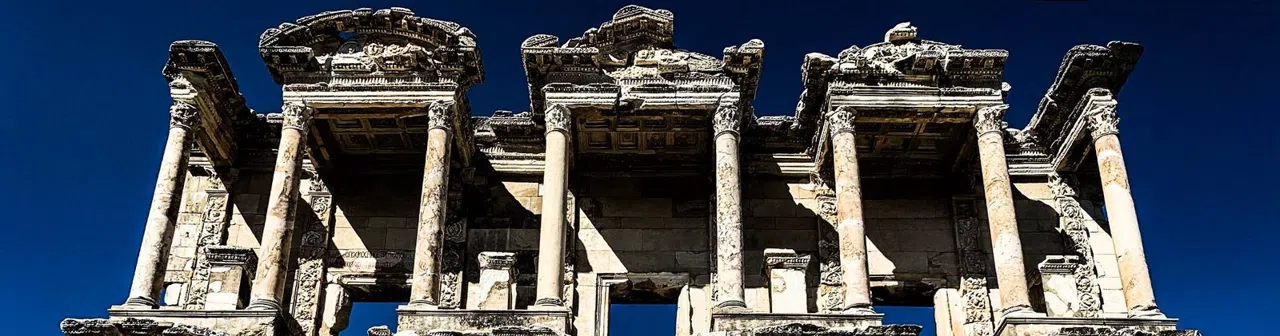
The marble of Curetes Street is grooved where cart wheels ran and polished smooth where feet still fall, and at eight in the morning it is cold enough to sit on. From the Upper Gate the valley opens below you: broken colonnades, the hollow of the theatre, the two-storey library facade at the bottom of the slope. The direction you walk it in decides whether this is a comfortable two hours or a three-kilometre climb in full Aegean sun.
What you are actually walking through
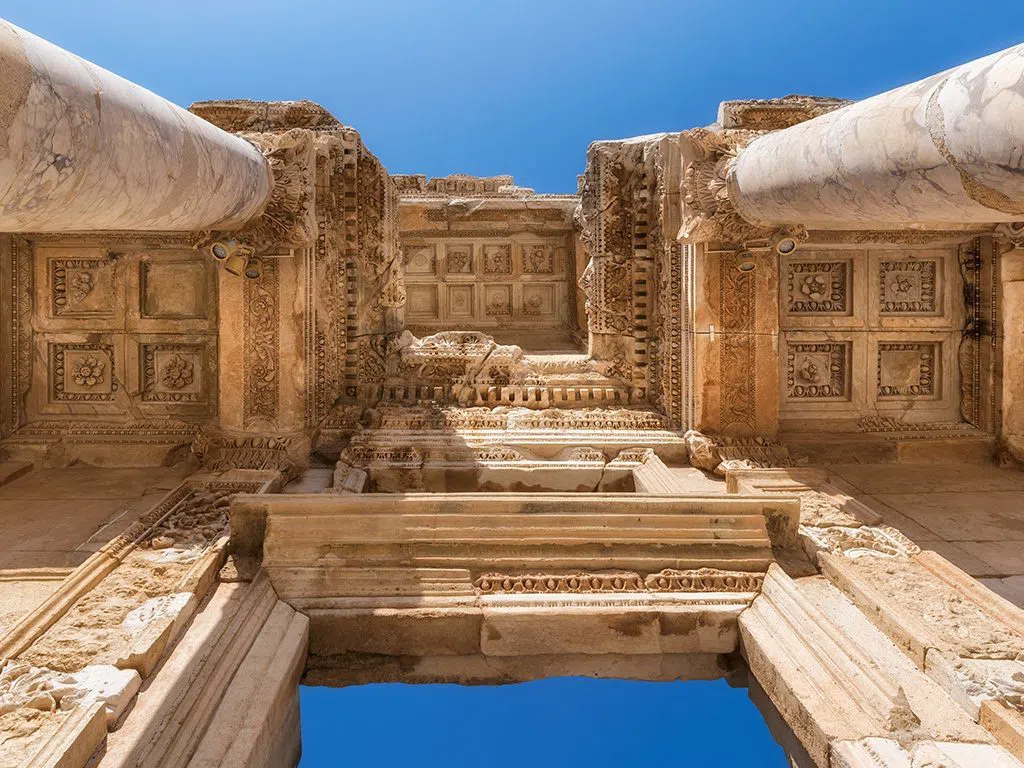
The Ephesus Archaeological Site (Efes Antik Kenti, in Selçuk, the Izmir district that surrounds the ruins) is a Roman provincial capital with its street plan still readable, not a single monument. You walk a paved main street between civic buildings, past fountains, latrines, shopfronts and the fronts of houses, down to the library and the harbour road, with the theatre cut into the hillside on your left. Almost none of it is roped off at a distance. At Ephesus you are in the street rather than looking at it from a viewing platform.
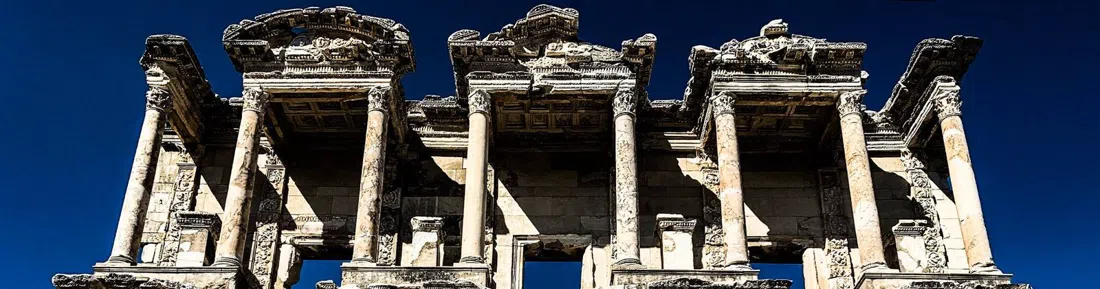
It is a UNESCO World Heritage site and it is open daily from 08:00, with last tickets around 18:45 in summer and 17:30 in winter. Entry is €40 per adult at the gate, payable by card or in Turkish lira; euro cash is not accepted at the windows, which catches out a surprising number of people who turn up with a pocketful of notes. That ticket includes the Ephesus Experience Museum. In season there are also night openings from the Lower Gate, Wednesday to Saturday, which is the one way to see the marble without a crowd on it.
Doing it downhill, not uphill
There are two entrances, and the choice matters more than anything else in this article. Coaches drop at the Upper (Magnesia) Gate and collect at the Lower Gate, and they do that because the site runs downhill from top to bottom. Walked in that direction it is an easy two to three hours: a gentle descent of about three kilometres with the shade of the hillside on you early in the day. Walked from the Lower Gate upward it is the same three kilometres as a slog, on stone that throws heat back at you from mid-morning onward.
If you drive yourself or arrive by taxi, the cheapest fix is to be dropped at the Upper Gate and arrange your pick-up at the Lower, or simply take a taxi from the Lower Gate car park back up. Two to three hours is the honest figure for the main street with stops; add an hour if you read every panel, and add the Terrace Houses separately.
The Terrace Houses earn the extra ticket
The Terrace Houses of Ephesus (Yamaç Evler, halfway down Curetes Street inside the main site) need a ticket on top of site entry, and the combined Ephesus plus Terrace Houses plus Ephesus Museum ticket is €52. This is the one add-on that is genuinely worth the money. Under a modern shelter sit seven Roman apartments with their wall frescoes, floor mosaics and underfloor heating channels in place, on a stack of terraces you cross by steel walkway. It is roofed and shaded, and nothing else on the site is.
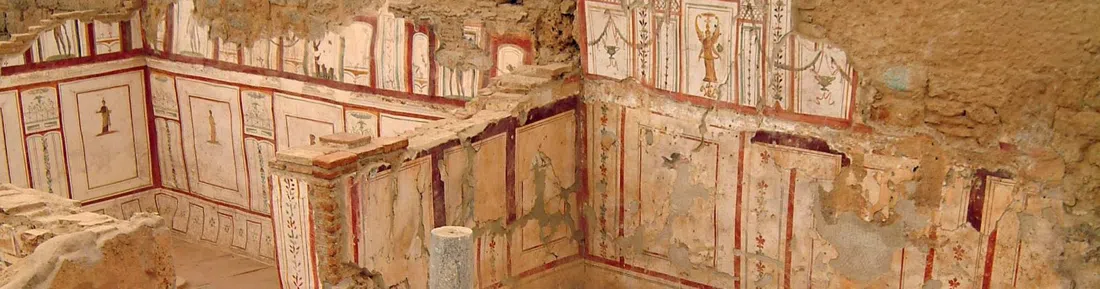
The walkways are single-file and one-way, so guides brief their parties outside and send them through in halves. That works, but it means a large group flows rather than stops, and you will feel pushed if you want to linger. Couples and pairs get much more out of it. Wheelchairs cannot manage the stairs at all, and there is no alternative route.
The show that puts the crowds back
The Ephesus Experience Museum (Efes Deneyim Müzesi, at the site) is a 35-minute audiovisual show in three rooms, air-conditioned, with headsets in sixteen languages that keep a whole group moving through together. It handles roughly 2,200 visitors a day, so you may wait a few minutes for the next cycle to start. It is included in the €40 ticket (around $13.50 if you were buying it alone), which makes the decision easy.
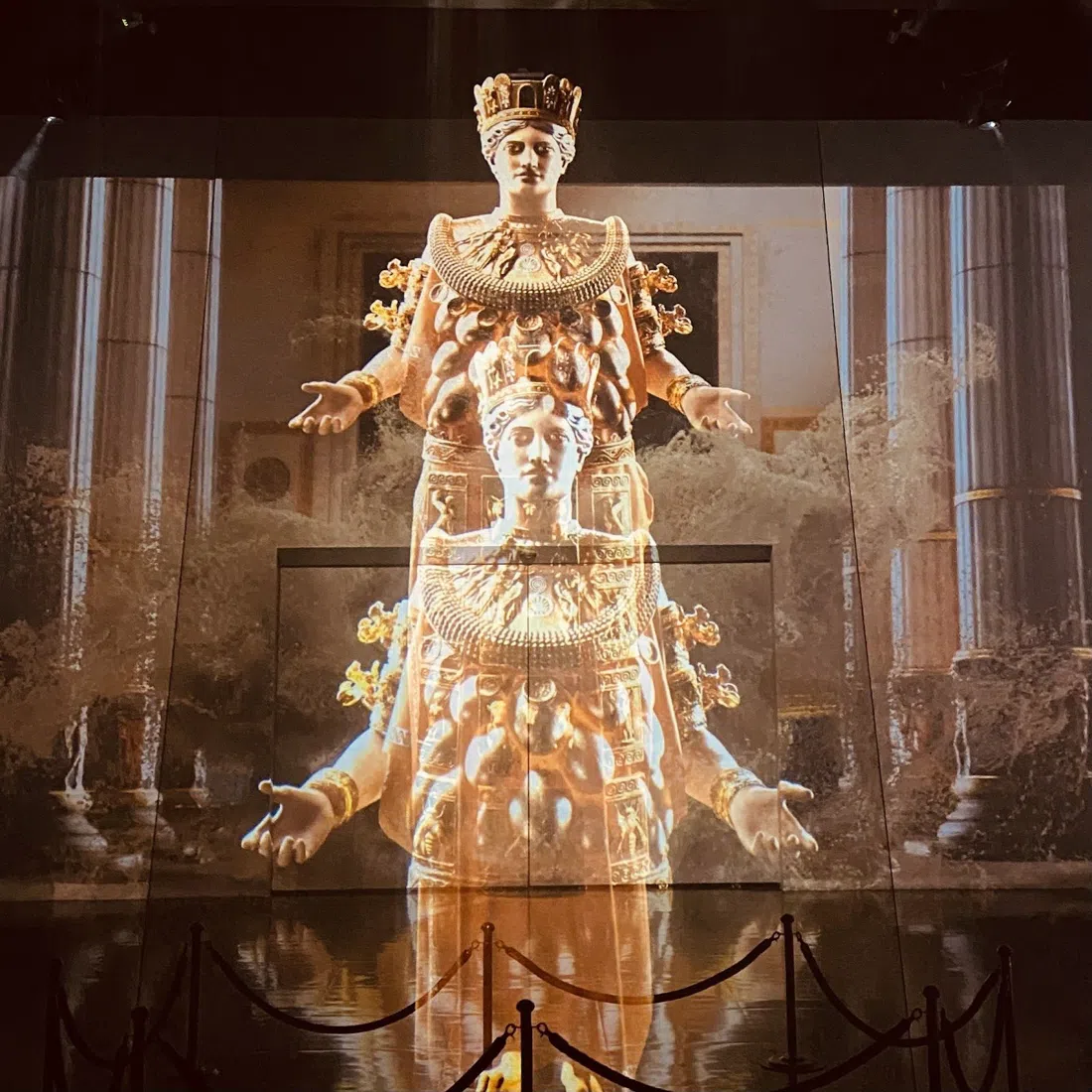
It gives the bare stones their colour, noise and population back, and it works best before you walk rather than after. Skip it if you have epilepsy or vertigo, or if projection fog and strobing put you off; it uses all three.
Where everything portable ended up
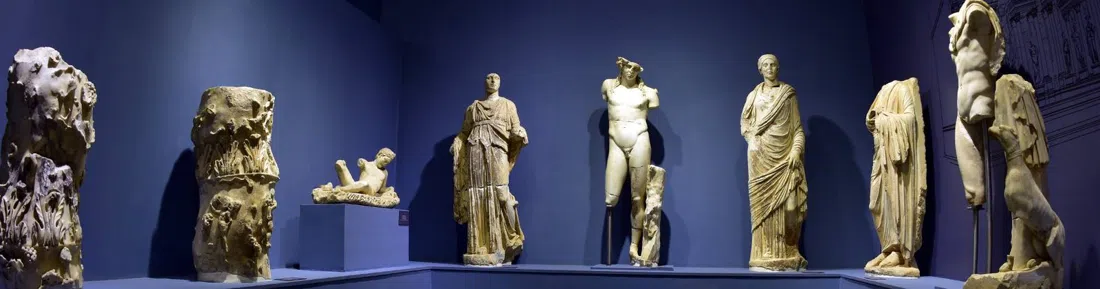
Everything small that came out of the ground here is three kilometres away in town at the Ephesus Archaeological Museum (Efes Müzesi, central Selçuk), including both Artemis statues. It costs €10 on its own and is free on the €52 combined ticket, and it is open 08:30 to 20:00 daily with the desk closing at 19:30. Give it an hour. The ruins make much more sense either side of it, because the site itself is stripped: the statues, glass, ivory and coins that filled those buildings are all in these halls. Coach groups come through routinely, but the rooms are compact, so guides work a party along in sections and it never feels like a scrum.
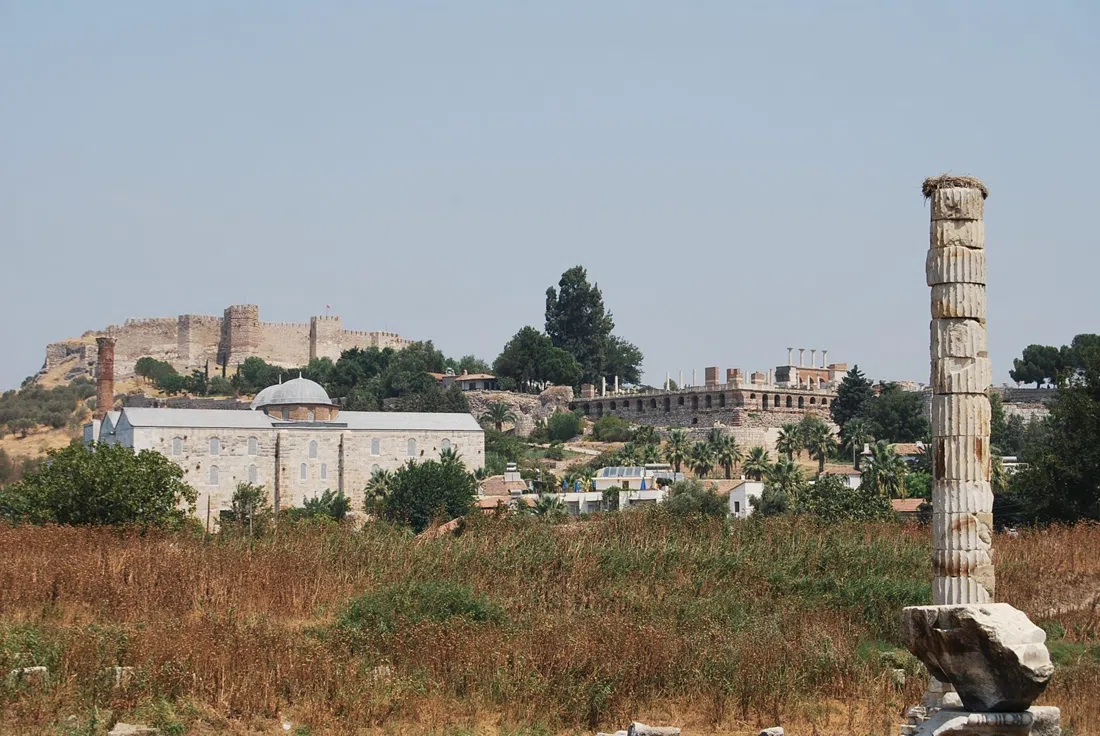
Five minutes away, the Temple of Artemis (Artemision, on the road between town and the ruins) is an open field with one re-erected column, a stork on top of it more often than not, and no gate, ticket desk or shelter. Ten minutes is plenty and most people are underwhelmed. Go anyway: it is free, it is one of the Seven Wonders, and it sits directly between the museum and the hill, so avoiding it takes more effort than seeing it.
The hill above the town
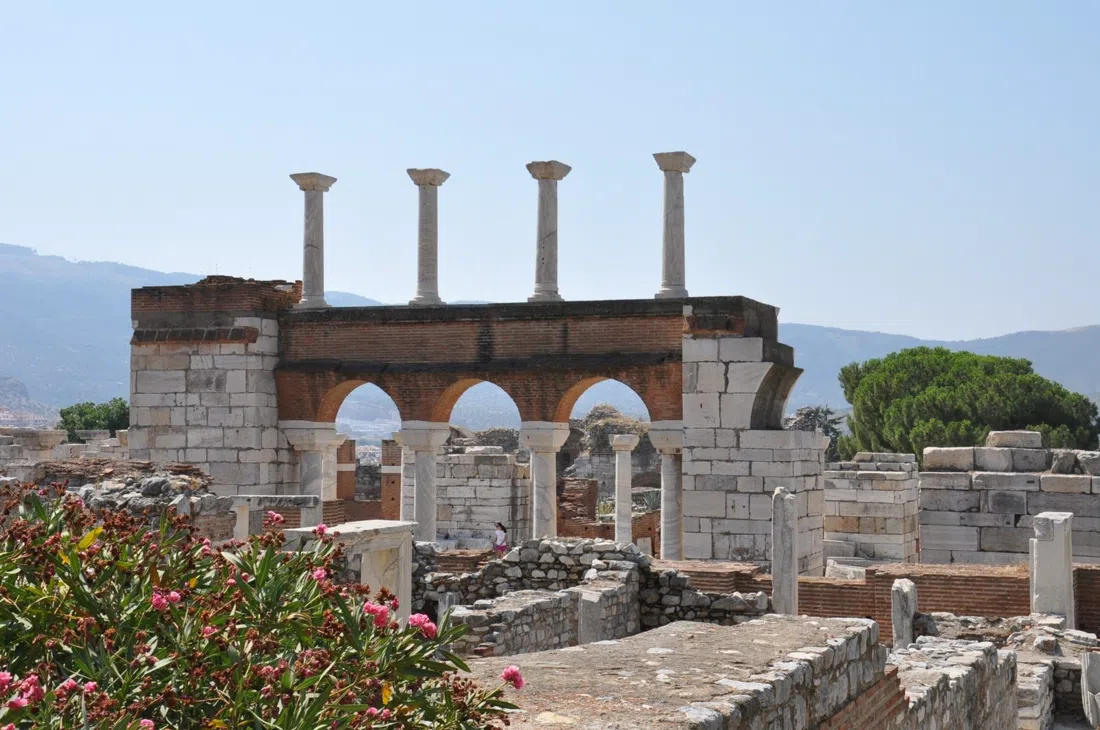
Basilica of St John and Ayasuluk Fortress (Ayasuluk hill, Selçuk) is about €6 for both, and it is the best-value stop in the area. The terrace looks straight down on the Temple of Artemis, the İsa Bey Mosque and the aqueduct, so the whole geography of the place finally clicks. The fortress above reopened properly after years of restoration work led by Pamukkale University. The path up is rough underfoot and steepish in places, fine for most people, but slower walkers in a group will lag and should be told so before they start.
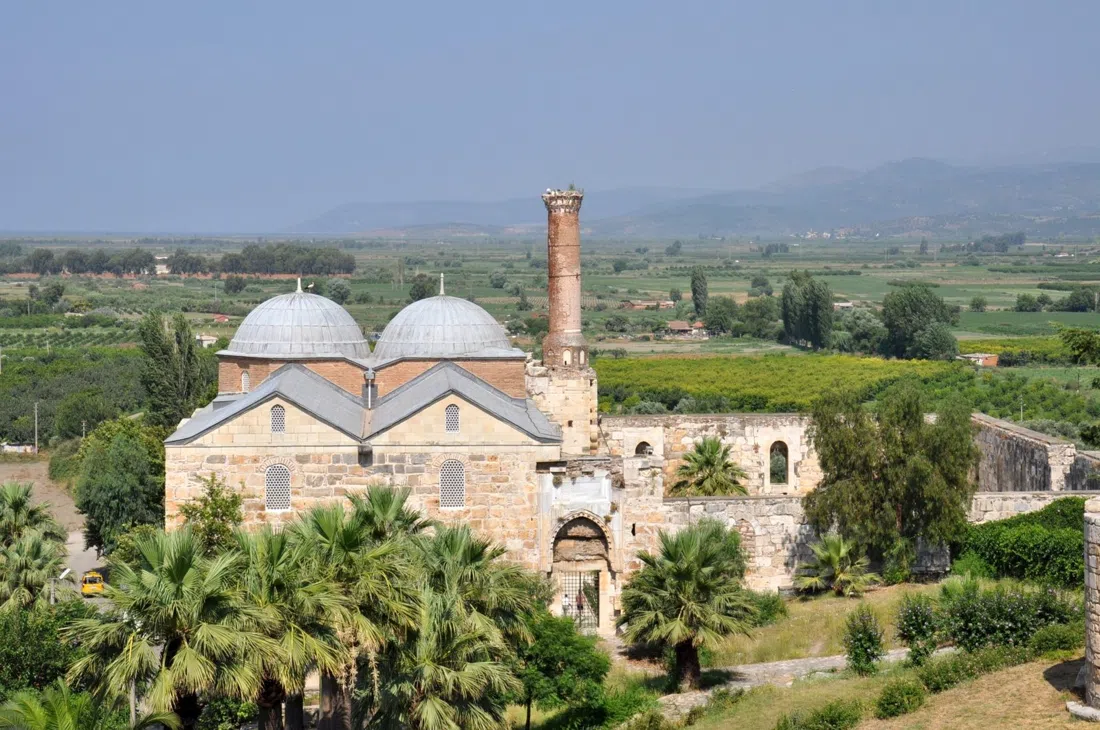
At the foot of the same hill, the İsa Bey Mosque (İsa Bey Camii, below the fortress gate) is free and open to visitors daily, roughly 09:30 to 20:00. Cover shoulders and knees, take your shoes off, and stay out of the five prayer times; groups in particular should time their visit around them. It reopened in January 2025 after a two-year restoration, and the columns holding its roof up were quarried out of the ruins you have just walked through.
The shrine on the mountain and the cave nobody visits
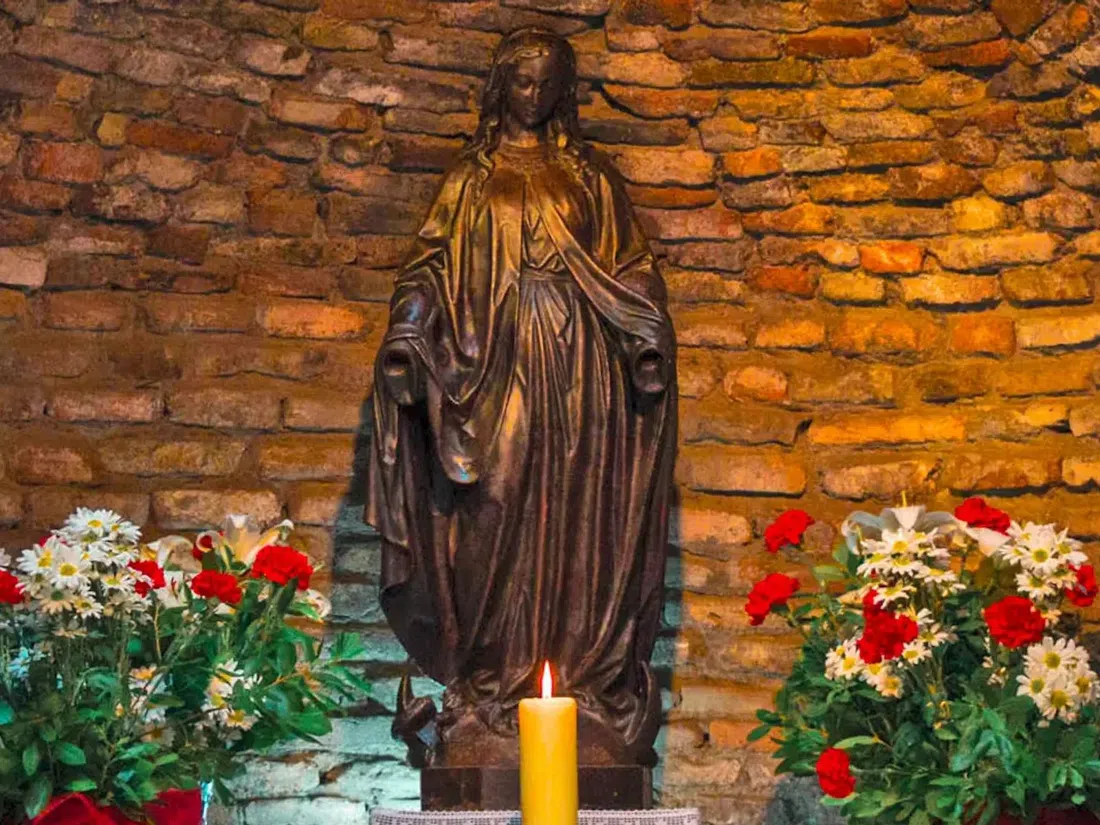
The House of the Virgin Mary (Meryem Ana Evi, on the wooded mountain above the ruins) runs on its own administration, its own ticket and its own sunrise-to-sunset hours, so nothing about your Ephesus ticket applies here. It is around €13.50, or 700 TL, per adult, and euros are accepted, unlike at the ruins. Coaches arrive all day from the city and the cruise port, and because entry to the small stone chapel is single-file, parties are held outside and released in batches. Shoulders and knees must be covered; wraps are lent at the entrance. No photography inside the house. Believers find it moving; non-believers often find it a twenty-minute stop with a queue attached, and that is a fair reading too.
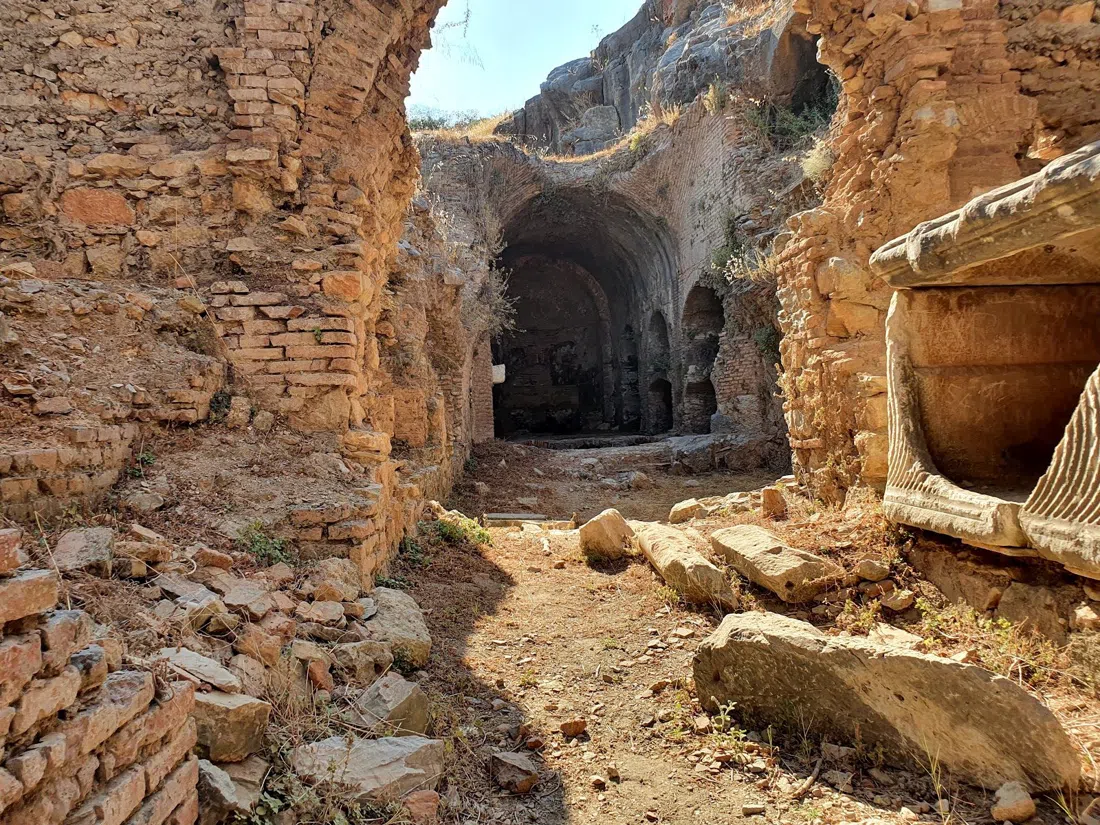
The Cave of the Seven Sleepers (Yedi Uyurlar Mağarası, east of the Vedius Gymnasium) is free, unstaffed and reached by asphalt road, and almost no coach itinerary includes it. It is a real Byzantine rock-cut burial complex, sacred in both the Christian and the Quranic tellings of the same legend, and it stays quiet even in August. A minibus can park; a full coach has nowhere sensible to put its passengers. Fifteen minutes, and the quietest fifteen you will get here.
Tickets, queues and whether to book ahead
The queue at Ephesus is not usually long, but it is slow, and it has one structural quirk worth knowing: licensed guides get priority at the ticket windows. Guided parties walk straight in while walk-ups wait. That, rather than the commentary, is the strongest practical argument for booking a guided day, along with the transport and the fact that someone else solves the two-gate problem for you.
Guided options run seven days a week and start from 110 USD per person, currently discounted from 116 USD. Across the bookable days here there are 2,405 traveller reviews, and the most-booked option holds 4.9 out of 5 from 1,180 of them, which is a high bar for a full-day bus trip. If you would rather go independently, buy at the gate with a card and go early; there is no advantage to a walk-up at midday.
Access, rules and what to skip
The main street is stone, uneven and cambered, and there is no continuous shade anywhere on it. Wear flat shoes with grip. There is water and a café at the Lower Gate end and very little in between, so carry a bottle. Wheelchair users can do a meaningful part of the lower site but not the Terrace Houses and not the upper slope comfortably.
If your time is short, the order of sacrifice is straightforward: skip Artemis last (it costs you ten free minutes), skip the mountain shrine if you are not going for religious reasons, and never skip the Terrace Houses to save time. Skip the town museum instead, because the ruins are the thing you came for.
Best time to go
First entry at 08:00 is the single best decision available. You get two hours before the coaches from the city and the cruise port arrive, cool marble, low light for photographs, and the Terrace Houses almost to yourself. The middle of the day between roughly 11:00 and 15:00 is the worst on both counts, crowds and heat. Late afternoon thins out again but the winter cut-off of 17:30 for last tickets makes that a narrower window than people expect.
By season, April to early June and late September into October are the comfortable months, with walkable temperatures and storks on the aqueduct arches in spring and early summer. July and August are hot enough that the downhill route stops being a convenience and becomes the only sensible plan; go at opening or take the night opening, Wednesday to Saturday from the Lower Gate. Winter is cool, quiet and green, with shorter hours and a real chance of rain on unsheltered stone. By day of the week, build the trip around a Saturday if you can, for the reason in the next section.
Eating, and the town you regroup in
The Byzantine Aqueduct (Cengiz Topel Caddesi, central Selçuk) runs straight through the middle of town with cafés and restaurants built around its arches, and storks nesting on top of them in spring and early summer. It is free to look at, it is the natural meeting point after the ruins, and it is the thing most people remember about the town itself.
Ejder (Cengiz Topel Caddesi, under the storks) is a small family-run charcoal grill with a street terrace: owner-cooked adana and aubergine kebabs and proper homemade mezes, roughly ₺600 to 800 a head, open daily from late morning to about 23:30. It suits two to six people; call ahead for anything larger, because the terrace is not big. Mehmet & Ali Baba Kebab House (two minutes from the Archaeological Museum) keeps longer hours, roughly 09:00 to 22:30 daily, is used to tour traffic, and takes group bookings on +90 232 892 3872. It is budget to mid-range, and it caters for vegetarians properly, which is rarer here than it should be.
The Selçuk Saturday Market (Selçuk Cumartesi Pazarı, the lanes off the centre) is only on Saturdays, three kilometres from the ruins, and it is village growers rather than souvenir sellers. Go early, because the aisles jam by mid-morning and they are too narrow for anything but a small group.
Half-days that pair with the ruins
Şirince village (eight winding kilometres uphill) is the standard afternoon pairing, open year round, with paid parking at around 200 TL. Be realistic about it: the fruit wines poured at every doorway are sweet novelties rather than serious drinking, and weekends are genuinely crowded. The village and the valley views are real, and midweek it is a different, better place.
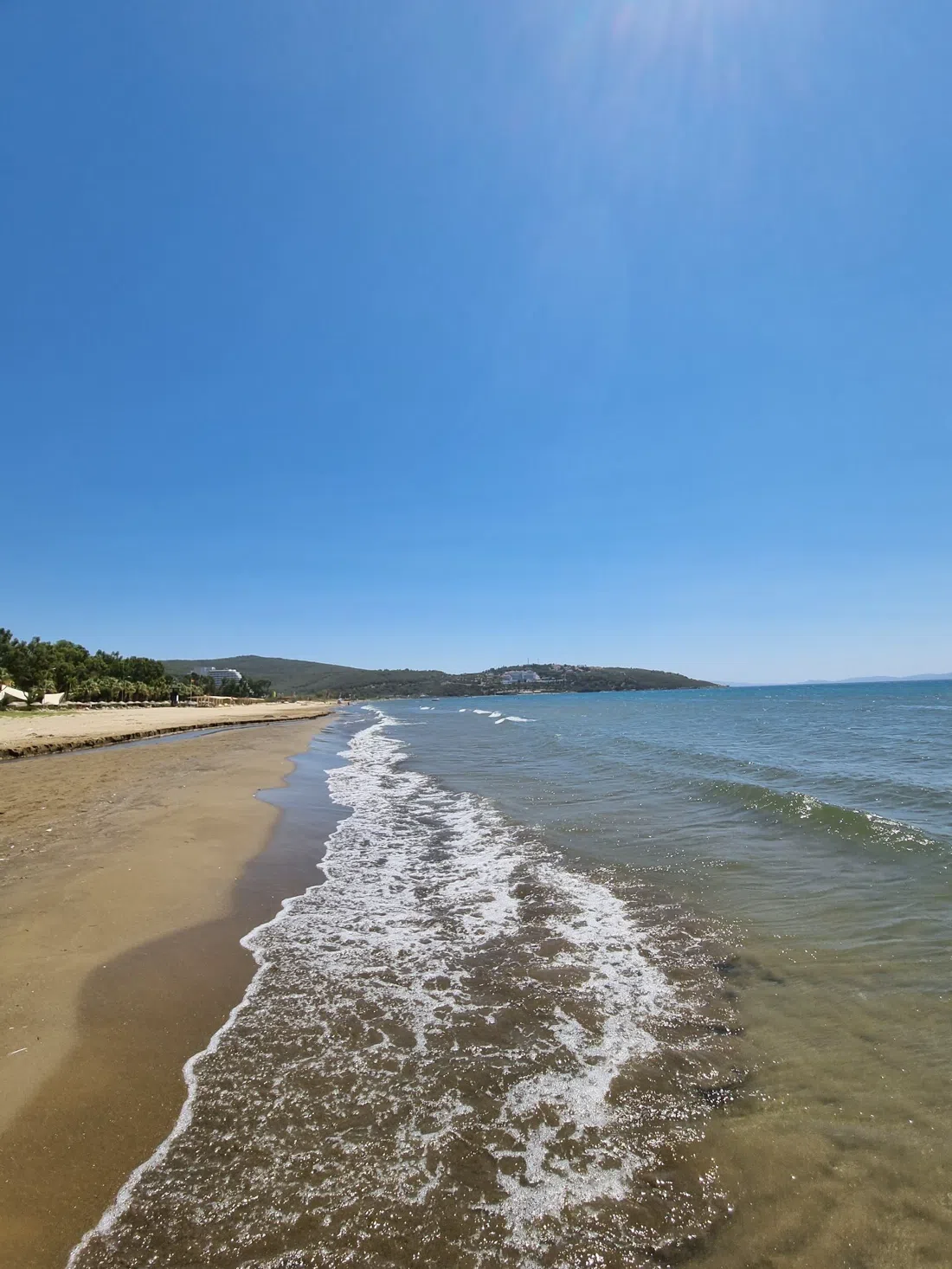
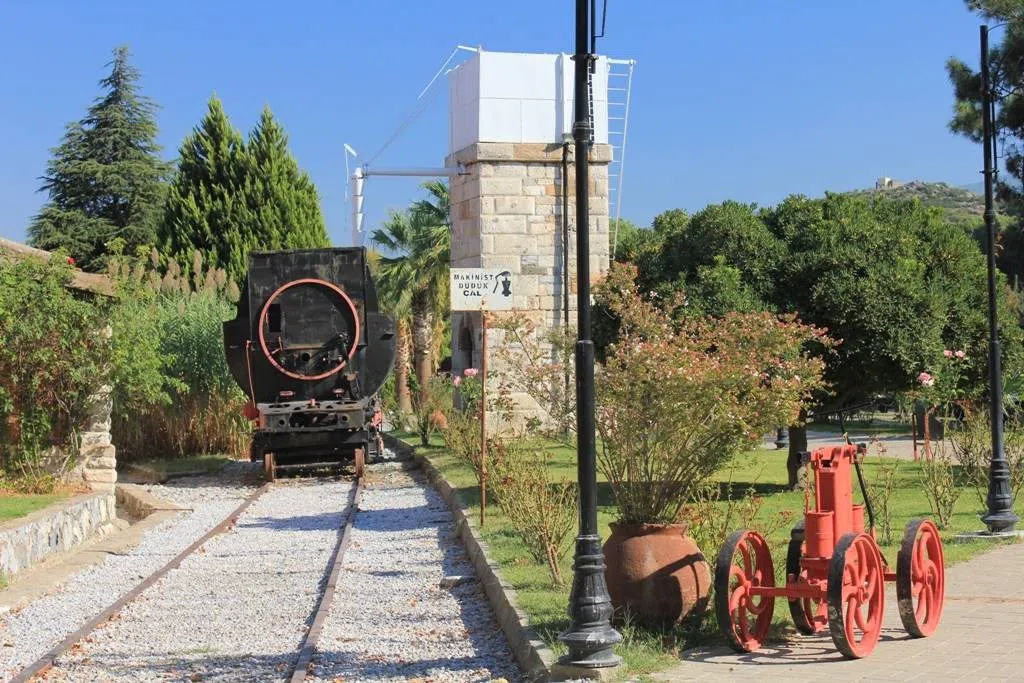
The TCDD Selçuk Çamlık Open-Air Steam Locomotive Museum (Çamlık, about ten kilometres south) is the country's largest railway museum and one of the bigger steam collections in Europe, on flat gravel ground, rarely busy, and costing a few lira with children cheap or free. It is the best wet-weather and bored-teenager fallback in the area. Pamucak Beach (four kilometres west of the ruins) is blue-flagged public sand with no entry control, sunbeds and umbrellas for rent on the organised stretches, and almost no natural shade, so bring your own. After four hours on hot marble it is the obvious afternoon.
Is it worth it
Yes, without much hedging. Ephesus is one of the few classical sites where you walk the actual streets rather than a marked route around them, and the Terrace Houses show you domestic Roman interiors that almost nowhere else still has. The honest caveats are these: it is expensive by local standards at €40, or €52 with the add-ons; it is hard work in July and August; and if you arrive at midday with a coach fleet you will see the same stones in worse conditions. It suits anyone with a genuine interest in the ancient world, families with children old enough to walk three kilometres, and cruise passengers with a fixed window. It suits people who want a shaded, sit-down, climate-controlled sightseeing day much less.
Practicalities
Selçuk is about 70 kilometres south of the city centre, and trains and intercity buses run down the coast through the day; from the town it is a short taxi or minibus hop, with the Lower Gate roughly three kilometres out and the Upper Gate a few kilometres further round. Driving is simple and there is parking at both gates. If you are basing yourself in the city rather than the district, start the day early, and see the Izmir guide for how the rest of the coast fits around this trip, and the Izmir hotel search for beds either in the city or out near the ruins.
On money: carry Turkish lira and a card. The Ephesus windows take card or lira but not euro cash; the mountain shrine does take euros. The market, the cafés under the aqueduct and the Şirince car park are all easier in lira. A full independent day for one adult is about €52 for the combined site, Terrace Houses and museum ticket, €13.50 at the shrine, €6 on the hill, nothing at Artemis, the mosque or the cave, and ₺600 to 800 for a proper dinner. A guided day from the city, transport and entries handled, starts at 110 USD per person. Budget three hours for the ruins, an hour for the museum, and an afternoon for whichever of the beach, the village or the locomotives suits the people you are with.