The Pactolus runs through Sartmustafa as an ordinary gravel creek, ankle-deep for most of the year and crossed on a farm bridge without ceremony. Its sand once carried electrum, the gold-silver alloy the Lydians struck into the world's first true coinage, so the idea of money started in a stream you could step over without noticing. Sardis, the city that grew rich on it, sits 92 km east of Izmir on a flat agricultural plain, and it is still a half-day you can get badly wrong.
What is actually standing at Sardis
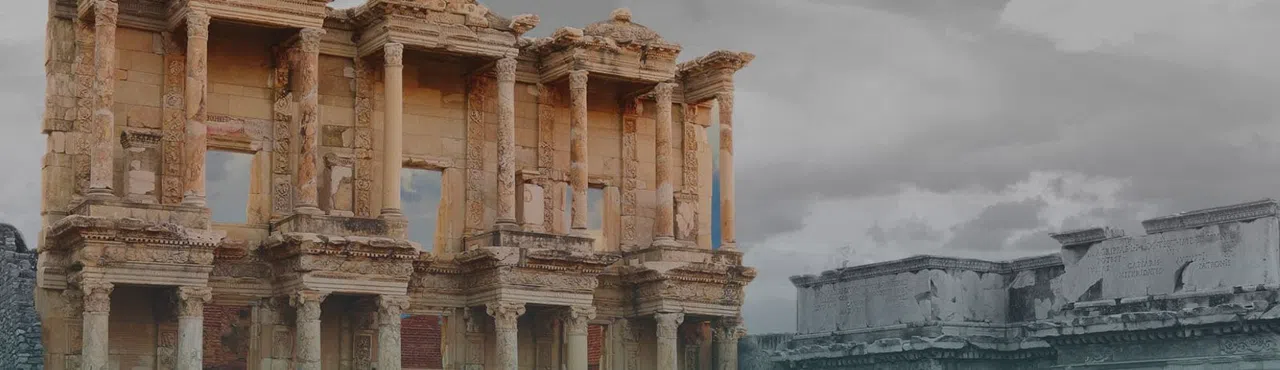
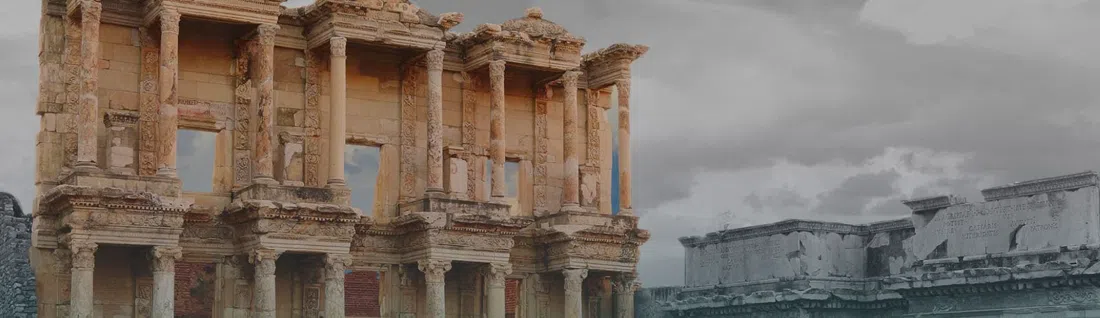
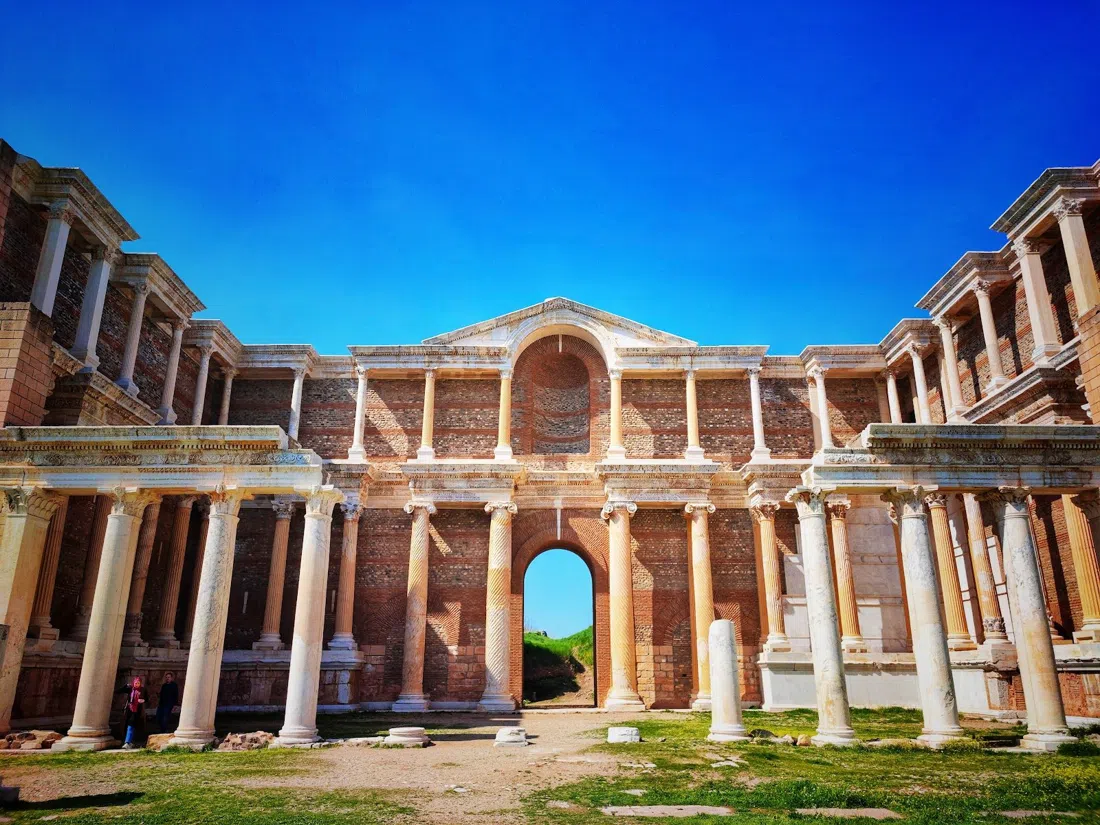
Sardis Archaeological Site, the Bath-Gymnasium, Marble Court and Synagogue sector (north gate, Sartmustafa) is the half the coaches come for, and it is also the easy half. It is a state-run örenyeri with coach parking at the gate and a wide, flat walkway running the length of the ruins. The main structure is the Roman bath-gymnasium, and the re-erected Marble Court stands at the front of it in columns and carved entablature. Inside the same complex is the largest known ancient synagogue anywhere. A Jewish congregation housed within the civic bath-gymnasium of a Roman provincial city is why the whole site was inscribed on the UNESCO World Heritage List in July 2025, and it is the one thing at Sardis that genuinely has no equivalent elsewhere.
Allow 45 minutes at a steady walk, an hour if you read the panels and sit down. Everything in this sector is at ground level, with no steps that matter and no climbing, so if anyone in the group uses a stick or a chair, this is the sector to do and the one to budget the time on. Guided groups are normal here and nobody will look at you oddly for arriving as thirty people; Müzekart holders walk straight in past the desk.
The second half is the one that gets dropped. The Sardis Archaeological Site Temple of Artemis precinct (south gate, Sartmustafa) has its own gate roughly 1 to 2 km south of the main sector, reached by driving through the village, and its own car park that takes coaches. The walk from gate to temple is short and level. What stands there is the fourth-largest Ionic temple of the ancient world: a field of column bases, two standing columns' worth of scale to read the rest against, and enough footprint that the numbers stop being abstract. Thirty minutes covers it honestly.
Both sectors are on one ticket, and that is the practical point to take away from this article: €3 for foreign visitors, ₺200 for Turkish adults, under-18 foreign visitors free. The single most common way visitors here get short-changed is a tour that stops at the gymnasium, lets everyone photograph the Marble Court for 25 minutes and drives on. The temple is the half most people thought they were coming for. Before you book anything, read the itinerary and check it names the Artemis precinct or the south gate; if it doesn't, ask, and if the answer is vague, assume you are not going.
The climb nobody on a coach does
The Sardis Acropolis (Sart Kalesi) hiking trail starts behind the Artemis sector car park, has no gate, no booking and no charge, and is not a group activity in any sense. It is a strenuous, completely unshaded hour each way on loose footing, and it is unfenced above long drops. Polybius called this the strongest place in the world and from the top you can see why: the plain opens out and the mounds on the far side come into view. Coach tours never do this, and they are right not to. Go up only if you are a fit independent walker with real shoes, a hat and more water than you think you need, and do it first thing rather than at midday.
The royal mounds on the plain
Bin Tepe Lydian Tumuli and the Tomb of Alyattes (Tekelioğlu, Salihli) is the other half of the UNESCO inscription and the half almost every itinerary leaves out. It is open landscape on farm roads 7 to 17 km north of Sardis: over a hundred elite Lydian burial mounds scattered across some 75 km², including one of the largest tumuli on earth. There is no ticket booth, no staff and no visitor set-up at all. A full-size coach can reach the Alyattes mound, but the approach tracks are rough and a minibus copes far better.
Set your expectations before you drive out. You are going for the scale of a landscape where the horizon is interrupted by man-made hills, not for interiors or interpretation. If that sounds thin, skip it without regret; if the Lydians are the reason you came, it is the most atmospheric 45 minutes of the day.
Where the portable finds live
The ruins and the objects were separated long ago, and Manisa Museum (Manisa Arkeoloji ve Etnografya Müzesi, Yunusemre) is where the portable Sardis material actually is. It reopened in a purpose-built building on 17 May 2025 after 25 years closed, with around 1,700 objects on show. Entry is €3 for foreign visitors or ₺200 for Turkish adults, opening hours are 08:30 to 17:30 with the ticket desk closing at 17:00, there is full coach access, and, unusually for the region, it opens every day. The 2.2 m marble youth holding a quince, carved around 470 to 450 BC and found reused in a Roman pavement at Sardis in August 2026, is destined for these galleries.
The museum does two jobs: it gives you the explanation the ruins can't, and it is the reliable fallback when it rains or when you have burned the morning and need an indoor second stop.
Two more ruins on the same road
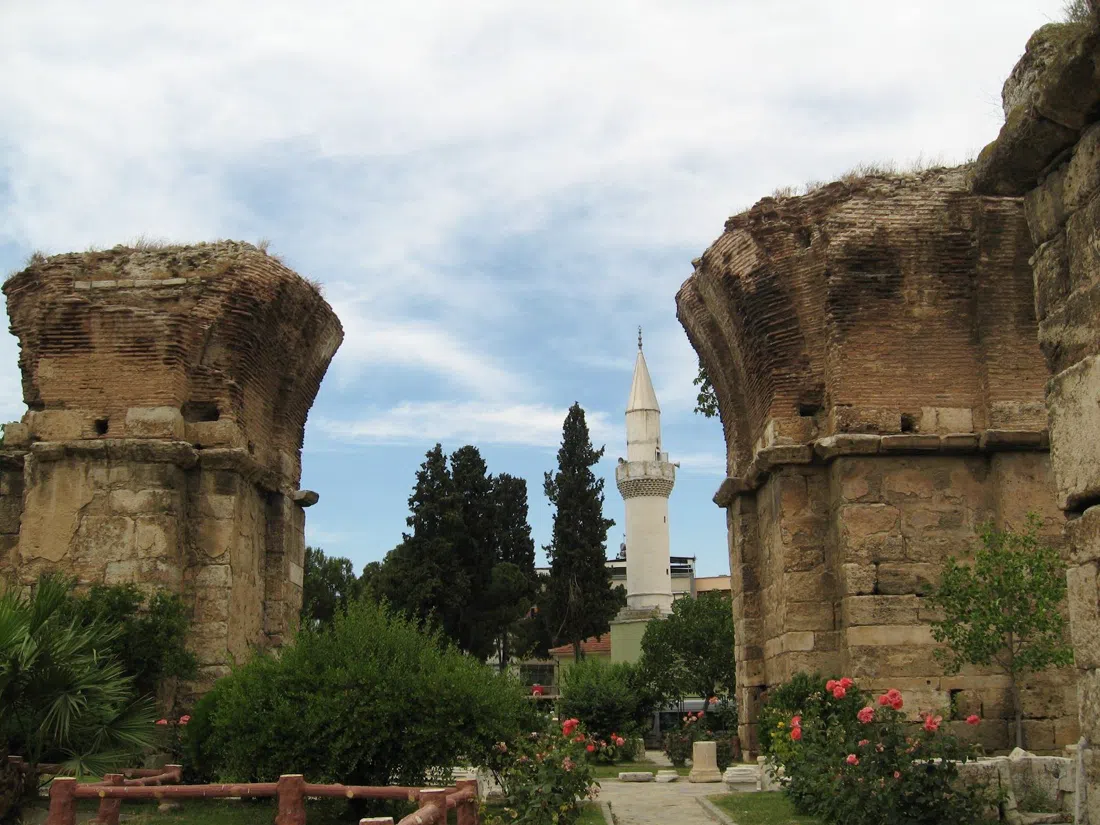
Thyatira (Tepe Mezarlığı) and Akhisar Museum is the standard same-day companion on a bus itinerary, and it earns its place by contrast. The site sits in the middle of a working town, with the museum next door; coaches park on the surrounding streets and groups are routine here. The ruins are viewable in daylight hours and €3 for foreign visitors covers the museum too, but the museum is closed on Mondays, which is worth knowing before you build a Monday. Sardis shows you a great city abandoned to a plain; Thyatira shows you a great city almost entirely under shops and houses. It is compact and quick.
The Basilica of St John, Alaşehir (ancient Philadelphia) is about 35 km east of Sardis and the natural third stop on the same road. Only three of the original six great piers of this late-6th or early-7th-century domed basilica still stand, which is enough to read the span of what has gone. It is free, unticketed and open daily, verified as such in 2026. The lanes around it are narrow and often one-way, so coaches drop in central Alaşehir and groups walk the last few minutes in. Fifteen minutes is enough, and it costs nothing.
Volcanic country further east
Sardis sits inside the Kula-Salihli UNESCO Global Geopark, designated in 2015, and its official front door is the Kula Geopark Visitor Centre 'Katakekaumene' (Kula). Guided tours, school programmes and geo-education sessions are its core business, so booked groups are exactly what it is set up for, but it opens weekdays only, 08:00 to 17:00, which kills it for a Sunday coach. There is no published admission charge; treat it as free or nominal and confirm when you book. It is in this guide mainly as a scheduling warning.
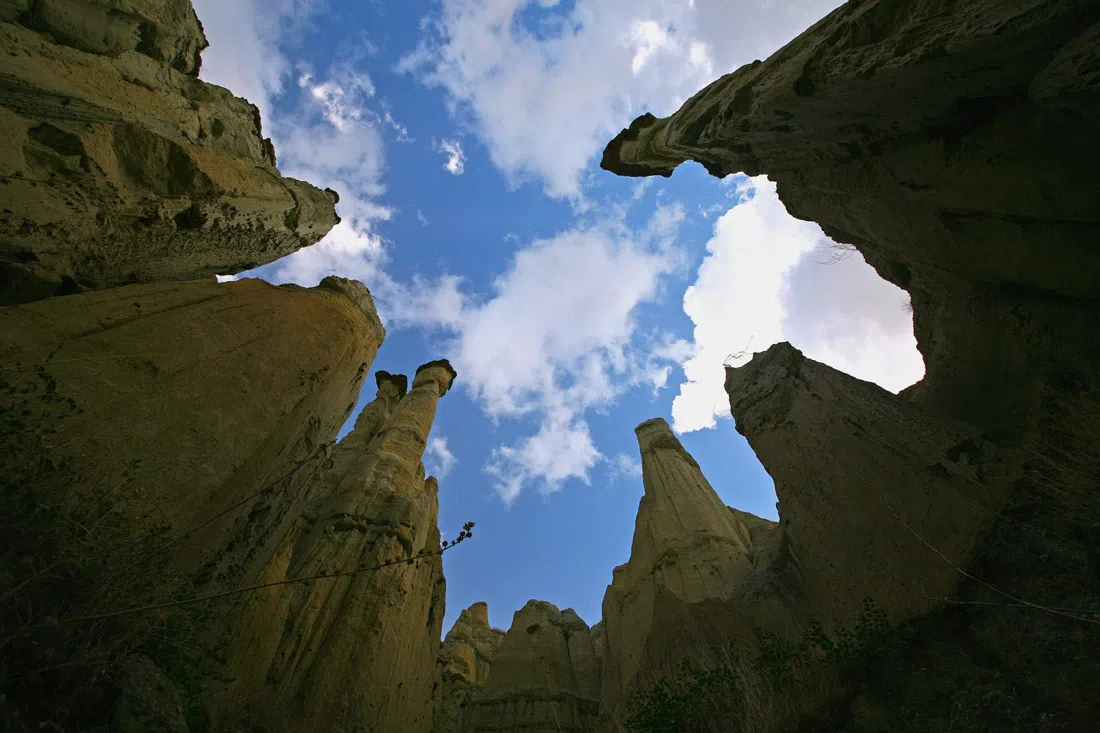
The Kula Fairy Chimneys (Kuladokya, 18 km east of Kula town) are unfenced, free to walk and reachable by coach, a registered natural site of about 37 acres with a valley trail through it. The rock shapes are Cappadocia-like but the geology is different: 14-million-year-old lake sediments rather than volcanic tuff. The area is small and there are no facilities at all. It works as a 30-minute leg-stretch on a long driving day and nothing more.
Lunch, hot water and a bed
Sartmustafa village (Sart) is where both Sardis gates sit, and its capacity is the thing to understand. A handful of pide shops and some tea stools at the crossroads cope with a few people, not thirty. There is no proper café or shop inside the archaeological site, so carry water in with you. Groups should plan to eat in Salihli, 9 km away.
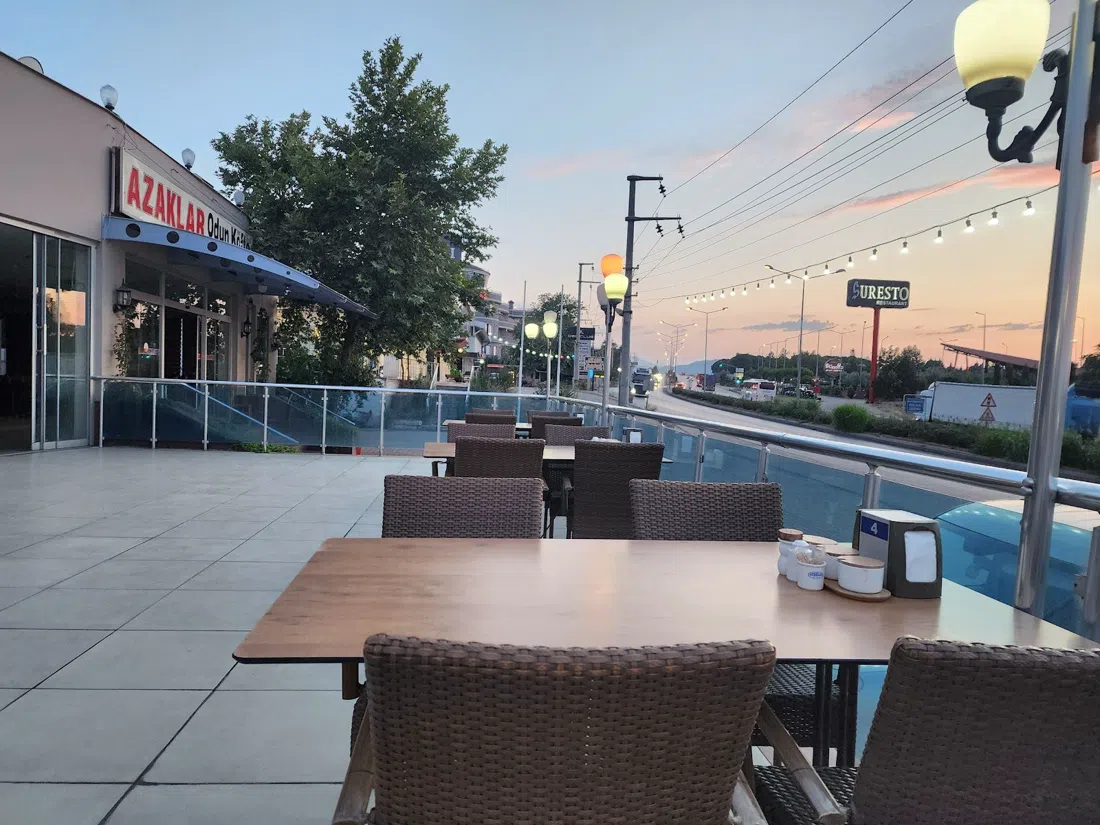
In Salihli, Azaklar Odun Köfte (est. 1911) is the right lunch. It is a fourth-generation family grill house with its own adjoining function hall, so it genuinely absorbs large parties; call ahead on 0236 715 14 00. The dish is odun köfte, grilled over oak since Balkan migrants brought the recipe in 1910-11 and registered as a geographical indication in 2008. A plate of köfte with bread and salad is a modest per-head sum, and it is a far better hour than a highway service plaza.
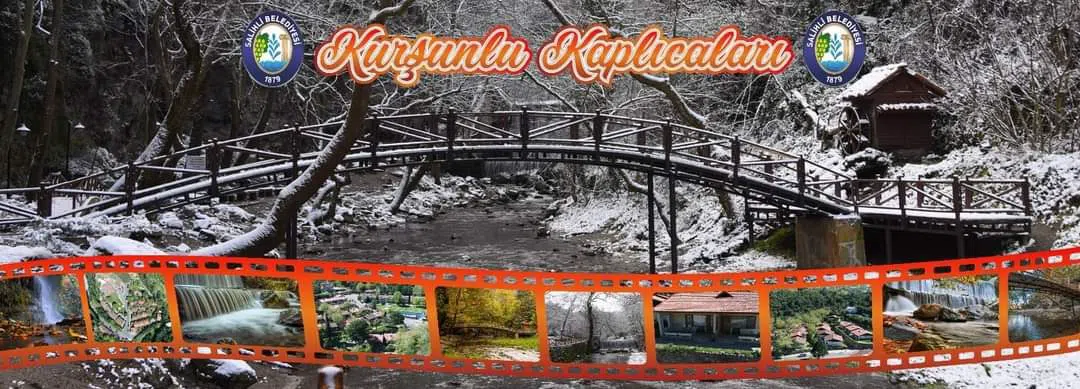
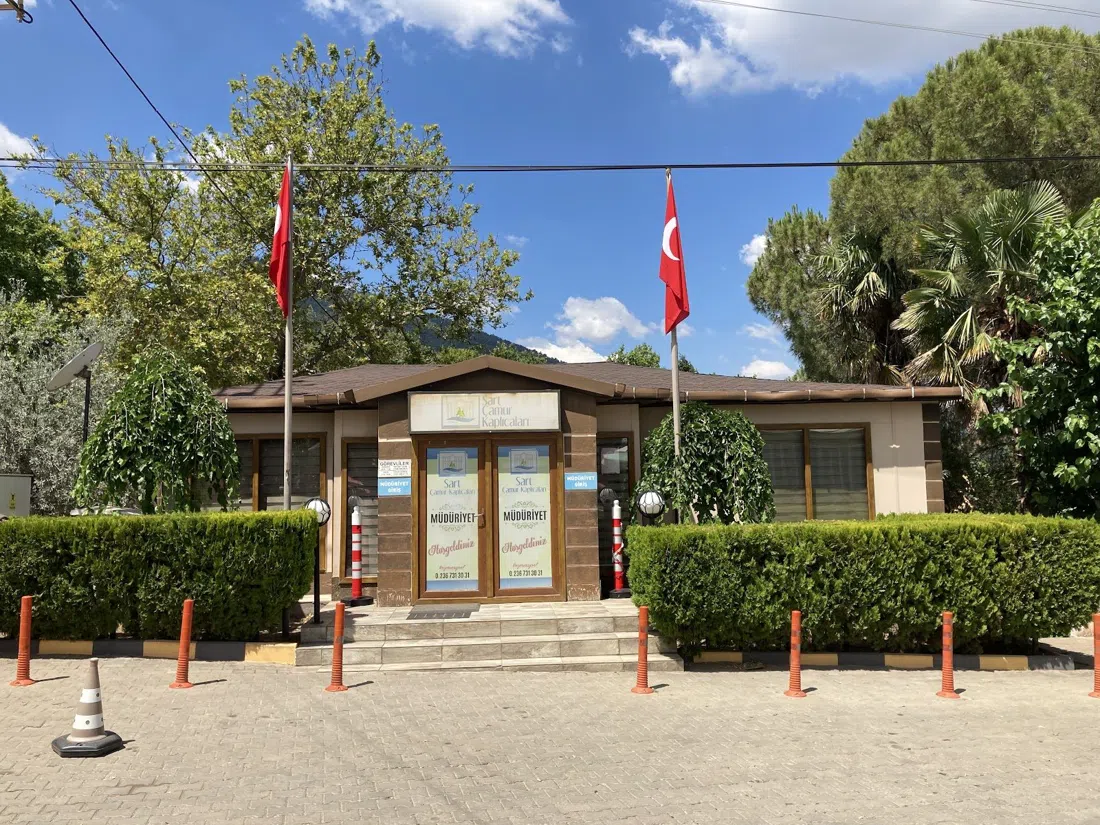
For hot water there are two honest options at opposite ends. Sart Çamur Hamamı (Çamurhamamı, 11 km from Salihli) is the nearest, in use since Roman times, 52°C and heavy in calcium, sodium bicarbonate and sulphur. It is a village-run mud bath, not a spa: bring cash and your own towel, expect agricultural standards, and come as two or four people rather than a coachload. Kurşunlu Kaplıcaları (Allahdiyen) is the municipality-run alternative and the region's main public thermal site, with 86 units and 270 beds, two indoor pools, two saunas and a physiotherapy centre, built for block bookings and day groups. Salihli Municipality publishes the 2026 rates itself: ₺400 per person per hour for the thermal pool, rooms from ₺2,000 for a two-bed to ₺4,000 for a five-bed per day, with free pool access for residents between 08:30 and 20:30.
Sart village has no hotel at all, which leaves one decision. Either you day-trip the 92 km from Izmir, or you overnight at Lidya Sardes Hotel Thermal & Spa (Salihli), the biggest property in the area (reported at roughly 123 to 192 rooms depending on how the inventory is counted), with free parking and the only local capacity to absorb a coachload for lunch or a night. Book direct on +90 236 715 5555; rates are mid-range four-star thermal, with group and half-board terms on request. Staying out here is what turns a rushed highway stop into an unhurried 08:30 arrival at an empty gate. If you would rather sleep on the coast and drive out, the Izmir hotel search is the place to start, and the wider Izmir guide covers the city end of the trip.
Tickets at the gate or a seat on a bus
There is no queue problem at Sardis in the way there is at a famous coastal site. The desk at each gate is quick, Müzekart holders walk straight through, and the only congestion is self-inflicted: three coaches arriving within ten minutes of each other, all funnelling onto the same walkway in front of the Marble Court. Arrive before 10:00 or after 15:00 and you will often have the synagogue to yourself.
Doing it independently is cheap: €3 or ₺200 covers both sectors, and the acropolis, Bin Tepe, Alaşehir and the fairy chimneys cost nothing. Guided options exist and run seven days a week, but the ones that include Sardis are generally multi-day circuits of the Seven Churches rather than a half-day run, and they start from 1330 USD per person. The bookable tours here carry 157 traveller reviews between them, with the top-rated one at 5.0/5 from 78 reviews, so quality is not the issue. The question is whether you want a five-day coach itinerary or an afternoon.
Best time to go
Go in the morning. The Marble Court faces the light well early, the temple field has no shade at all, and the acropolis trail becomes genuinely unpleasant after about 11:00 in summer, when the plain regularly sits above 35°C. April to early June and mid-September to late October are the comfortable windows. Winter is quiet and perfectly walkable at the two gates, but the Bin Tepe farm tracks turn to mud and a car without clearance will struggle.
For days of the week: avoid Monday if Akhisar's museum is part of the plan, avoid weekends if you want the Kula visitor centre, and remember Manisa Museum opens every day with the ticket desk shutting at 17:00, which makes it the one dependable late-afternoon or wet-weather half of a Sardis day.
Is it worth it
Yes, with a condition. Sardis is worth the drive if you do both gates and understand what you are looking at; it is a thin, slightly puzzling 40 minutes if you do the gymnasium alone and leave. It suits anyone with a real interest in the ancient world, Seven Churches travellers, and families with older children who can cope with heat and dust. It suits visitors with limited mobility better than most ancient sites, because the main sector is flat throughout. It does not suit anyone expecting a restored city, interiors, or facilities, since there is no café, no shop and very little shade, and the acropolis climb is not for groups, children or anyone uneasy near unfenced drops.
Practical notes
Driving from Izmir is about 92 km and roughly an hour and a half each way on good road. Without a car, Sart railway station has its own stop on the Izmir-Uşak and Izmir-Alaşehir regional line, two trains a day from Izmir Basmane plus one Manisa-Alaşehir service, landing you about a kilometre's walk from the ruins for a few tens of lira. It takes around 2.5 hours and there are no facilities at the station, so it is strictly for independent travellers who plan the return leg before they set off. Groups arrive by road; coaches can reach both Sardis gates, Manisa Museum, Akhisar and the fairy chimneys, but a minibus is the right vehicle for Bin Tepe.
Carry Turkish lira. The two gates and the museums are straightforward, but the village pide shops, tea stools and the mud bath are cash-only in practice, and the mud bath expects you to bring your own towel.
Both Sardis sectors plus the drive between gates is about two hours. Add lunch in Salihli and Manisa Museum and you have a comfortable full day. Add Bin Tepe, or Thyatira and Alaşehir, and you have a long one: pick one direction, not both.
A self-driven day is small money: €3 or ₺200 for the Sardis ticket covering both sectors, the same again for Manisa Museum, €3 for Thyatira including its museum, nothing for the acropolis, Bin Tepe, Alaşehir or the chimneys, a budget lunch, and ₺400 per person per hour if you finish in the Kurşunlu thermal pool. Fuel and a hire car will cost you more than every admission combined.